
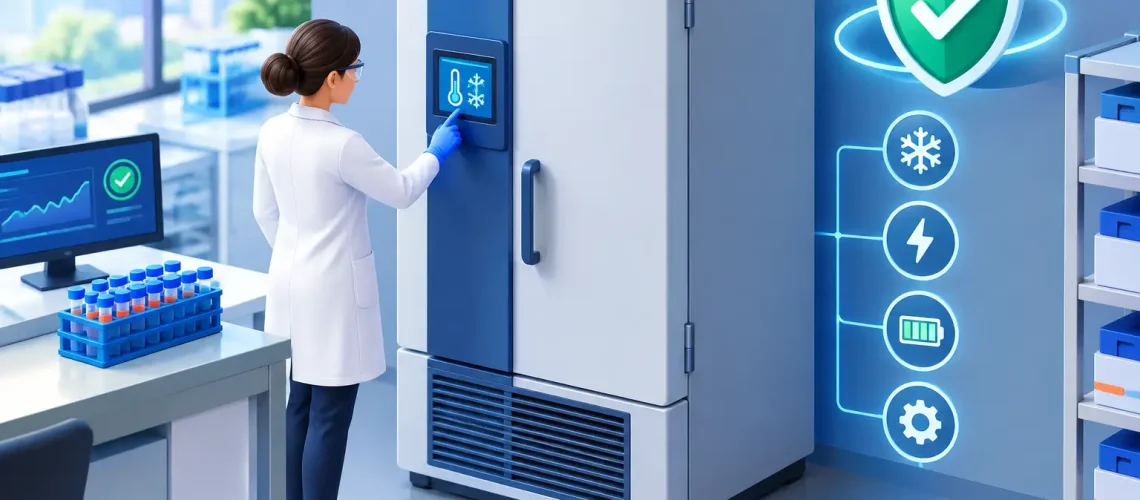

A -80°C freezer can appear to be operating normally until a small mechanical or control issue becomes a sample-threatening event. For research teams, biotech freezer uptime is not simply an equipment metric. It is a measure of whether irreplaceable materials, research timelines, and compliance obligations remain protected when staff are off-site or attention is focused elsewhere.
The most effective uptime strategy does not begin when a freezer alarms or fails. It begins with visibility into the conditions that lead to failure: rising run time, repeated temperature recovery events, dirty heat rejection surfaces, unstable power, door-use patterns, and components operating outside their normal range. Facilities that manage these signals early can reduce emergency service calls while making better decisions about maintenance, capital planning, and inventory risk.
Why Biotech Freezer Uptime Requires a Different Standard
A temperature excursion in a general-purpose cooler may create product waste and an operational disruption. In a biotech environment, the consequences can be much broader. A freezer may hold cell lines, patient-derived samples, clinical trial materials, reagents, retained lots, or years of research that cannot be recreated at any practical cost.
That changes the standard from “repair quickly” to “prevent loss before performance degrades.” A unit that reaches setpoint today may still be a reliability concern if it is cycling excessively, recovering slowly after door openings, or running with a compressor that is drawing abnormal current. Temperature alone tells only part of the story.
Ultra-low-temperature freezers also operate under significant mechanical demand. Compressors, fans, condensers, cascaded refrigeration circuits, gaskets, probes, and controllers all affect performance. Age, ambient heat, room ventilation, frost accumulation, power quality, and loading practices can compound the risk. A maintenance plan built only around calendar intervals may miss a developing condition between visits.
Start With a Clear Definition of Uptime
Uptime should be measured in a way that reflects research risk, not just whether a freezer has electrical power. A practical definition includes the percentage of time the unit remains within its validated operating range, the speed at which it recovers after normal use, and the absence of conditions that could lead to an excursion or unplanned transfer.
For a single freezer, a facility may focus on stable temperature performance and alarm response. For a multi-freezer lab or a distributed biotech portfolio, the measure should also include repeat alarm frequency, service history, energy use trends, and the availability of backup capacity. The goal is to identify equipment that is becoming unreliable before it becomes an emergency.
This distinction matters when setting expectations with maintenance teams and service partners. A freezer that has not failed outright is not necessarily performing acceptably. Repeated high-temperature warnings, extended compressor operation, or a pattern of after-hours alarms should trigger investigation, even when staff can temporarily reset the condition.
Monitor the Leading Indicators of Failure
Continuous monitoring is the foundation of dependable biotech freezer uptime, but the monitoring strategy should go beyond a single temperature alarm. Temperature data is essential for protecting inventory and documenting conditions. It is more valuable when paired with operating data that explains why the temperature is moving.
A well-designed monitoring and control approach can track freezer temperature, alarm status, door events, compressor operation, power interruptions, and other system-specific signals. Trend data gives facility teams context. Instead of receiving another isolated alert, they can see whether a temperature event followed frequent access, a loss of room cooling, an extended defrost-related condition, or a component operating longer than normal.
Alert design deserves careful attention. Too many low-priority notifications can cause alarm fatigue, while a notification sent only to one person creates an avoidable single point of failure. Escalation paths should account for after-hours coverage, response ownership, and the time required to move inventory if a unit cannot recover.
Monitoring also needs independent verification. If a freezer controller has a fault, a separate calibrated sensor and alarm path can provide the warning needed to protect samples. The right arrangement depends on the freezer model, facility protocols, and validation requirements, but redundancy is often justified where the inventory is especially valuable.
Use trends to prioritize service
Condition trends turn monitoring from a recordkeeping tool into a maintenance decision tool. For example, steadily longer pull-down times may point to declining heat rejection, worn door gaskets, a fan issue, or a refrigeration circuit problem. Higher cabinet temperatures during peak afternoon hours may indicate that the mechanical room or laboratory ambient conditions are affecting capacity.
Those signals do not always mean replacement is necessary. In some cases, cleaning a condenser, improving airflow, replacing gaskets, correcting door practices, or addressing a control issue can restore stable performance. In others, the data may show that an aging unit is no longer a reasonable risk for critical inventory. The value lies in making that decision before a failure forces it.
Build Maintenance Around Risk, Not Just the Calendar
Preventive maintenance remains essential, but it should be tailored to the freezer’s operating environment and criticality. A low-use backup freezer in a clean, temperature-controlled room does not carry the same risk profile as a heavily accessed unit near heat-producing equipment.
Maintenance should examine the conditions that reduce refrigeration capacity and shorten component life. This includes condenser cleanliness, airflow, fan operation, door seals, frost conditions, drain paths where applicable, electrical connections, alarm functionality, and calibration status. Technicians should also review operating history rather than treating each visit as a standalone inspection.
Facilities should document findings in a way that supports decisions. A note that a unit was “checked and operating” has limited value. A useful record identifies measured temperatures, observed run behavior, corrective work completed, parts approaching end of life, and recommended follow-up. That history allows operations leaders to compare units and direct budgets toward the assets that present the greatest exposure.
Protect the System Around the Freezer
Freezer reliability depends partly on infrastructure outside the cabinet. Inadequate room ventilation can raise ambient temperature and force compressors to work harder. Overcrowding can block condenser airflow. Unstable electrical service can create nuisance alarms, damage controls, or cause a temporary shutdown that becomes a temperature event.
Assess the installation as a system. Confirm that electrical circuits are appropriate, emergency power strategy is understood, clearances are maintained, and room conditions remain within the manufacturer’s specifications. Backup generators can be valuable, but they are not a complete answer if transfer delays, generator capacity, or outlet assignments have not been tested under realistic conditions.
Inventory management also affects uptime. Freezers packed beyond recommended limits may have poor air circulation and slower recovery. Units that are opened repeatedly for small sample pulls experience a different load than those accessed in scheduled batches. Where workflow permits, organizing inventory, using freezer maps, and staging routine retrievals can reduce door-open time without adding complexity for lab staff.
Establish a Response Plan Before an Alarm Occurs
Even a well-maintained freezer can experience an unexpected event. The difference between a manageable alarm and a major loss often comes down to the first 30 minutes. Every critical freezer should have a documented response plan that identifies who receives alerts, who can access the lab, where inventory can be moved, and how decisions are recorded.
The plan should be tested, not merely filed. Staff need to know which alarms require immediate transfer, which require on-site inspection, and when to contact a qualified refrigeration provider. Backup units must have usable capacity, known setpoints, current calibration status, and a clear path for moving materials safely.
For facilities with multiple assets, centralized dashboards can make response more efficient. Rather than relying on handwritten logs or a sequence of disconnected calls, operations teams can review asset status, active alarms, and historical behavior from one place. Refrigeration Technologies, LLC uses monitoring and control strategies, including ArtikControl™ solutions, to help facilities identify developing refrigeration issues and act before a failure threatens critical inventory.
Measure the Business Value of Higher Uptime
The return on proactive freezer management extends beyond avoiding a single catastrophic event. Better visibility can reduce emergency labor, avoid unnecessary parts replacement, improve maintenance scheduling, and lower energy waste caused by equipment running harder than it should. It can also provide the documentation needed for internal quality processes and risk reviews.
The right investment level depends on sample value, regulatory exposure, freezer age, redundancy, and operational tolerance for disruption. A research site with fully duplicated inventory may choose a different monitoring and maintenance approach than a site holding one-of-a-kind materials. What should not vary is the expectation that critical equipment is managed with evidence, defined ownership, and a plan for abnormal conditions.
A dependable freezer program makes risk visible while there is still time to act. When teams can see performance drift, verify alarms, and respond through a practiced plan, freezer uptime becomes an operational advantage rather than a recurring source of uncertainty.