
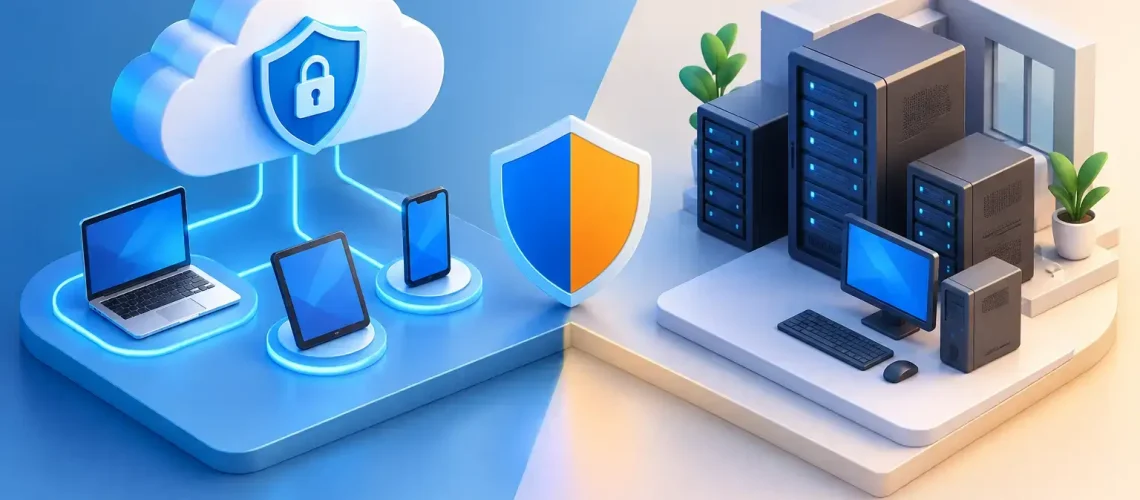

A walk-in cooler drifting a few degrees overnight is not a minor controls issue when it holds high-value inventory. For facility teams, the question of cloud controls versus local controls is really about how quickly a system can protect product, how clearly staff can see developing problems, and what happens when communications fail.
Both control approaches have a place in commercial refrigeration. Local controls provide immediate, on-site command of compressors, fans, defrost cycles, and alarms. Cloud-connected controls extend visibility beyond the mechanical room, giving operators access to trend data, notifications, and performance insight from virtually anywhere. The right choice depends on the facility, the criticality of the stored product, and the operational plan behind the equipment.
What Local Controls Do Best
Local controls are installed at or near the refrigeration equipment. A conventional thermostat, case controller, rack controller, pressure control, or programmable logic controller can make operating decisions without depending on an internet connection. If a suction pressure reaches a defined threshold or a case temperature rises beyond its setpoint, the local controller can initiate its programmed response immediately.
That independence is a meaningful advantage. A facility should not lose basic refrigeration control because a router fails, a cellular signal is interrupted, or an outside network service is unavailable. For that reason, local control logic remains essential for core equipment protection. Compressor safeties, high-pressure cutouts, temperature limits, defrost sequencing, and other critical functions belong at the equipment level.
Local controls can also be well suited to a single, relatively simple system with consistent operating conditions. A small operation may need dependable temperature management more than it needs enterprise-level analytics. In these environments, a properly selected and commissioned local controller can provide reliable performance with a lower initial technology investment.
The limitation is visibility. A local controller may indicate an alarm at the panel, but that does little for a manager at home, a maintenance director supporting several sites, or a service provider responsible for after-hours response. It also may not preserve and organize enough data to show why a problem occurred repeatedly.
Where Cloud Controls Change the Operating Model
Cloud-connected controls do not replace the need for local control. They add a monitoring, analysis, and communication layer that helps teams manage refrigeration proactively rather than wait for a failure to become obvious.
With cloud access, authorized users can view temperatures, alarms, equipment status, runtime patterns, and historical trends from a dashboard or mobile device. Instead of finding out about a warm box during a morning walkthrough, the team can receive an alert when temperatures begin moving in the wrong direction. That time difference can protect inventory, reduce emergency labor, and prevent a minor mechanical issue from escalating into a shutdown.
Cloud systems are particularly valuable for multi-site operators. A grocery group, restaurant portfolio, school district, cold storage operator, or medical network may have dozens of refrigeration assets spread across locations. Without centralized visibility, each site becomes a separate troubleshooting exercise. With connected monitoring, the operations team can compare performance, identify recurring alarms, prioritize service calls, and verify whether repairs corrected the underlying issue.
The data also supports better energy management. Refrigeration rarely wastes energy in one dramatic event. More often, waste accumulates through long compressor runtimes, poor defrost scheduling, unstable suction pressure, failing door seals, dirty coils, refrigerant issues, or controls operating outside intended parameters. Trend data makes these conditions easier to see and address before utility costs and equipment wear climb further.
Cloud Controls Versus Local Controls: The Critical Difference
The most effective comparison is not cloud control versus local control as an either-or decision. It is local autonomy versus remote intelligence.
A local controller should continue to operate essential equipment safely at the site. It needs to maintain programmed setpoints and protective logic even if the facility loses internet connectivity. Cloud connectivity should provide supervision, notification, data storage, reporting, and the ability to review operating conditions remotely. In some applications, it can also allow authorized remote adjustment of approved setpoints or schedules, subject to clear operating procedures and security controls.
This layered approach avoids a common mistake: treating cloud access as a substitute for sound refrigeration engineering. No dashboard can compensate for an undersized system, incorrect piping, poor airflow, worn components, refrigerant leaks, or improperly configured defrost cycles. Connected controls produce the best results when they are installed on a system that has been evaluated, tuned, and commissioned for its actual load and operating environment.
For mission-critical refrigeration, the distinction matters even more. Medical products, pharmaceuticals, biotech materials, food inventory, floral products, and temperature-sensitive beverages can all be affected by relatively short excursions. A local controller can maintain the immediate response needed at the equipment. Cloud monitoring gives stakeholders documented visibility, faster escalation, and evidence of what occurred before, during, and after an alarm.
Reliability Requires More Than Connectivity
A cloud-connected system is only as useful as its alarm strategy. Sending every possible notification to every possible person creates alarm fatigue. When teams receive too many low-priority messages, a serious temperature or equipment event can be overlooked.
An engineered monitoring plan defines which conditions require immediate action, who receives the alert, and what escalation occurs if the first contact does not respond. It also distinguishes between informational notices and alarms that threaten product protection or equipment safety. For example, a brief door-open event may deserve a different response than a sustained high-temperature condition combined with extended compressor runtime.
Communication reliability also deserves attention. Internet connectivity, local power, sensors, gateways, and backup procedures all affect system performance. Critical facilities should consider how alarms are handled during a network outage or power interruption. Local fail-safe operation, battery backup where appropriate, redundant notification paths, and documented response procedures can reduce exposure.
Cybersecurity should be part of the evaluation as well. Remote access should be limited to authorized users, protected by strong credentials, and managed with appropriate user permissions. The goal is operational access without creating unnecessary risk to the facility network or refrigeration equipment.
Choosing the Right Architecture for Your Facility
A single-site operator with basic refrigeration needs may be well served by reliable local controls paired with targeted temperature alarming. A multi-location retailer or cold storage operation may gain far more value from centralized cloud monitoring, detailed trend reports, and structured alarm escalation. Neither approach is automatically better without considering the application.
Start with the consequences of failure. Ask what a four-hour temperature excursion would cost in product loss, downtime, labor, compliance exposure, and customer impact. Then consider whether on-site staff are available around the clock, whether maintenance teams need to oversee multiple locations, and whether energy performance is being measured or merely assumed.
It is also useful to assess the existing system before adding technology. Older refrigeration assets often have hidden performance issues that monitoring will expose quickly. That is an advantage when there is a plan to act on the findings. A site assessment can identify control gaps, sensor placement needs, inefficient operating sequences, and equipment conditions that should be corrected alongside a monitoring upgrade.
For facilities seeking both local equipment protection and centralized insight, Refrigeration Technologies, LLC applies this combined approach through engineered controls and its ArtikControl™ monitoring platform. The objective is not more data for its own sake. It is earlier warning, informed service decisions, lower energy waste, and greater confidence that refrigeration assets are operating as intended.
Make Controls Part of a Response Plan
The best controls strategy does not end when the controller is installed or the dashboard goes live. Teams need clear ownership for alarms, practical temperature response procedures, and periodic reviews of the trends that point to developing issues. A recurring nuisance alarm may signal a sensor problem, but it may also be the first visible symptom of airflow loss, a failing fan motor, or a refrigeration circuit operating outside its design range.
When controls are selected as part of a broader refrigeration performance plan, they become more than a way to read temperatures. They give the facility a practical early-warning system: local logic that keeps equipment protected, and connected intelligence that helps the right people act before inventory, uptime, and energy budgets are put at risk.