
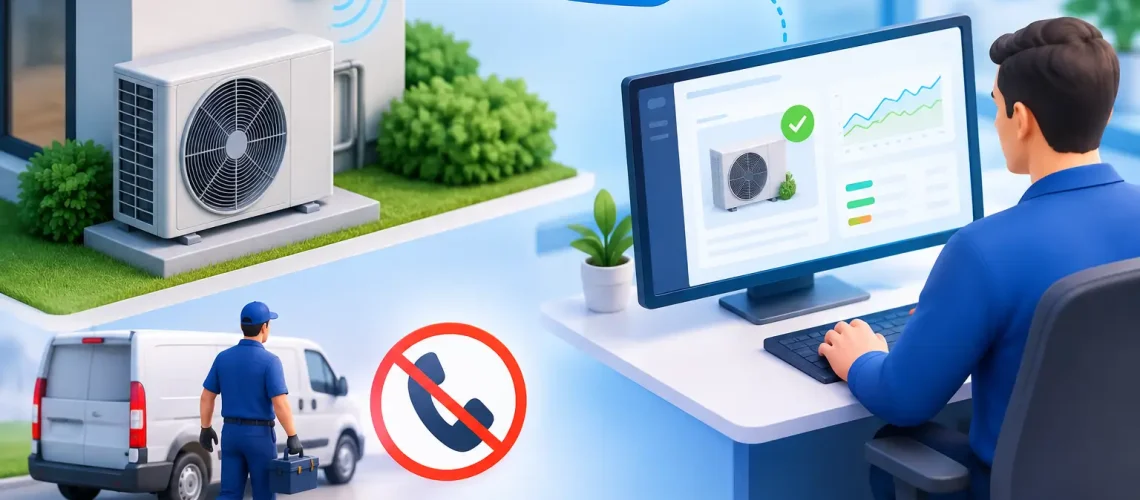

A walk-in cooler rarely fails at a convenient time. A compressor begins short-cycling overnight, a case temperature starts drifting during a busy weekend, or a freezer alarm is discovered only after product is already at risk. The immediate response is often an emergency service call, higher labor costs, and a facility team forced to react with incomplete information. Can remote monitoring reduce service calls? In many commercial refrigeration environments, yes – when it is applied as part of a disciplined maintenance and response strategy.
Remote monitoring does not eliminate the need for qualified technicians. Refrigeration systems still require inspections, repairs, refrigerant management, and component replacement. What it can do is change the timing and quality of service work. Instead of dispatching a technician after a failure has disrupted operations, facility teams can identify developing conditions, verify the severity of an alarm, and schedule targeted repairs before a minor issue becomes an emergency.
Can Remote Monitoring Reduce Service Calls in Practice?
The strongest opportunity is not simply reducing the total number of work orders. It is reducing unnecessary truck rolls, after-hours emergency calls, repeat visits, and avoidable failures. That distinction matters for grocery stores, cold storage facilities, food service operations, medical facilities, and other locations where refrigeration reliability affects product, compliance, energy use, and customer service.
A properly configured monitoring system collects operating data from critical equipment and turns that data into useful alerts. Rather than relying on periodic walkthroughs or a customer complaint to identify a problem, teams can see temperature deviations, compressor runtime changes, door-related temperature events, pressure abnormalities, defrost issues, and controller alarms as they occur.
When the alert reaches the right person with enough context, the response becomes more efficient. A manager may be able to confirm that a cooler door was left open and correct the issue without dispatching a technician. A maintenance director may see that a rack is operating outside its normal pattern and schedule service during planned hours. A contractor can arrive with a clearer diagnosis and the likely parts needed, reducing the chance of a second visit.
How Monitoring Changes the Service Workflow
Traditional service is often driven by failure. Equipment stops cooling, an employee notices product warming, or a high-temperature alarm sounds locally. By that point, the facility may have limited options: call for emergency service, move inventory, and wait while a technician investigates the cause.
Remote monitoring creates a more informed workflow. It establishes a normal operating baseline, identifies deviations from that baseline, and documents what happened before the alert. A technician no longer has to begin with a blank slate. Trend data can show whether a temperature rise was gradual or sudden, whether the problem began after a defrost cycle, and whether compressor runtime has been increasing for days.
That history is especially valuable for intermittent issues. A system may appear normal during a daytime service visit even though it experiences repeated overnight alarms, nuisance trips, or abnormal cycling. Monitoring helps expose patterns that are difficult to capture during a short on-site inspection.
For multi-site operators, the benefit extends beyond one repair. Centralized dashboards allow operations and maintenance teams to compare locations, prioritize the highest-risk conditions, and direct local teams before a situation escalates. The result is less time spent sorting through routine alarms and more attention directed toward conditions that require action.
The conditions most likely to prevent a call
Remote monitoring is most effective when it detects issues that can be corrected quickly or planned before equipment performance declines. Common examples include:
- Cooler or freezer doors left open, causing a temperature rise that can be corrected by on-site staff.
- Abnormal compressor runtime or short-cycling that indicates a developing mechanical, control, or load issue.
- Defrost failures or schedule problems that can lead to ice buildup, airflow restrictions, and temperature instability.
- Temperature drift that signals a problem early enough to protect inventory and schedule a controlled service visit.
- Repeated alarms at a specific location that point to a sensor, controller, communication, or operating-practice issue.
The objective is not to treat every alert as an emergency. It is to distinguish between a condition that needs immediate intervention, one that can be handled by trained site personnel, and one that should be added to a planned maintenance visit.
Better Alerts Matter More Than More Alerts
A monitoring platform can create more work if it produces constant, low-value notifications. Alert fatigue is a real operational risk. If site teams receive alarms for normal defrost activity, brief door openings, or conditions that resolve on their own, they may begin ignoring the notification stream. A serious alarm can then be missed.
Effective monitoring requires thoughtful alarm design. Setpoints, delays, escalation paths, and notification recipients should reflect the equipment, product sensitivity, operating schedule, and facility staffing model. A pharmaceutical storage area may require tighter thresholds and faster escalation than a back-of-house beverage cooler. A cold storage warehouse may need different logic than a single restaurant walk-in.
This is where engineered customization matters. The monitoring system should be configured around how the facility actually operates, not installed as a generic layer of technology. Refrigeration Technologies, LLC applies this approach through its ArtikControl™ monitoring and control solutions, pairing field-level refrigeration understanding with actionable system visibility.
The most useful alerts answer practical questions: What happened? How long has it been happening? Is the condition worsening? What equipment is affected? Who needs to respond? Without that context, monitoring can become another dashboard to check rather than a tool for reducing operational risk.
Where Remote Monitoring Will Not Replace Service
Remote monitoring is not a substitute for preventive maintenance or professional diagnosis. It cannot replace a technician’s ability to inspect electrical connections, test components under load, locate refrigerant leaks, verify airflow, or identify mechanical wear. It also cannot correct poor installation practices, undersized equipment, damaged insulation, or recurring operational issues by itself.
Some alerts will still require immediate dispatch. A rapid freezer temperature rise, a critical compressor failure, repeated high-pressure events, or a refrigeration rack alarm affecting large volumes of inventory may demand urgent on-site action. In these cases, monitoring does not prevent the service call, but it can reduce the time between failure and response and give the technician better information before arrival.
The return also depends on the condition of the existing system. If equipment is near end of life, consistently undersized, or operating with unresolved control problems, monitoring will reveal the issues but cannot make failing equipment reliable. The appropriate next step may be a retrofit, controls upgrade, or capital replacement plan.
Measuring Whether Calls Are Actually Going Down
Facility leaders should avoid evaluating remote monitoring based on anecdotal feedback alone. A clear baseline makes the value easier to see. Before implementation, review service records for at least several months and separate emergency calls from scheduled maintenance, repeat callbacks, and false alarms.
After monitoring is in place, track the number of after-hours dispatches, average response time, repeat failures, temperature excursions, product-loss incidents, and technician visits per location. Also review whether technicians are resolving issues on the first visit more often. A lower call count is valuable, but fewer emergency calls and fewer repeat visits often deliver the more meaningful cost reduction.
Energy performance should be part of the discussion as well. Equipment that runs longer than necessary, cycles abnormally, or struggles to maintain setpoint can increase utility use before it creates a visible failure. Monitoring data can identify those performance concerns early, helping teams prioritize repairs that protect both reliability and operating cost.
Building a Response Plan Around the Data
The technology delivers value only when people know what to do with the information. Establish clear ownership for alarms, including who receives them, how quickly they should respond, when to escalate, and when to contact a service provider. Site staff should understand the limited actions they can safely take, such as confirming a door closure or checking for an obvious airflow obstruction, without attempting refrigeration repairs outside their training.
For maintenance teams, the goal is to combine remote data with scheduled field work. If several noncritical issues appear at one location, it may be more efficient to address them during one planned visit than to generate separate service calls. If a trend points to a recurring root cause, the team can evaluate a permanent control or equipment improvement rather than repeatedly paying for short-term fixes.
The best monitoring programs make service more deliberate. They give facility teams time to protect inventory, give technicians useful diagnostic history, and give decision-makers a clearer picture of where maintenance dollars are producing results. When refrigeration performance is visible before a failure becomes urgent, every service call has a better chance of being necessary, planned, and productive.