
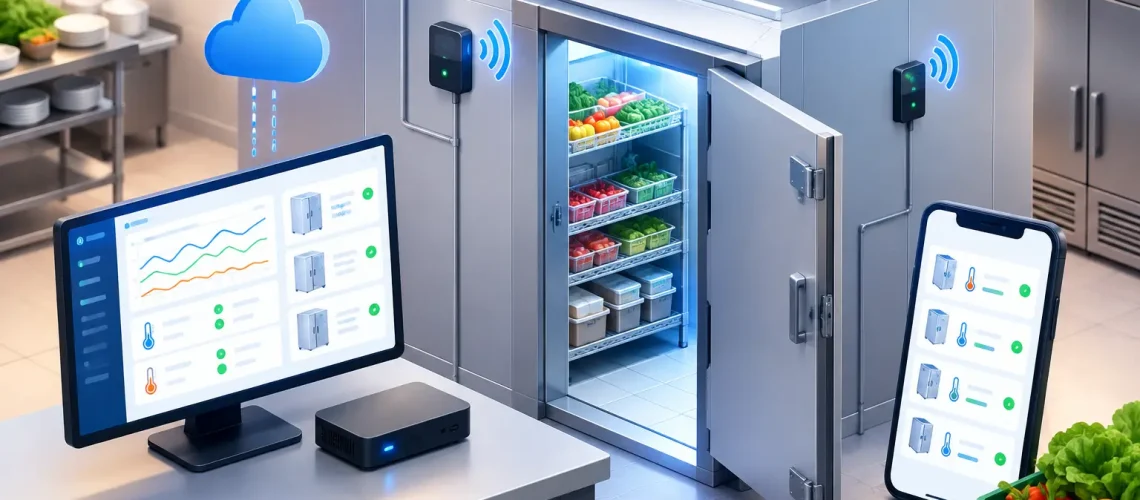

A walk-in cooler can remain within temperature range at 7:00 a.m. and be on its way to product loss by lunch. A failed condenser fan, a door left ajar, or a compressor cycling outside normal operating conditions can escalate before anyone walks past the case. The best commercial refrigeration monitoring systems give facility teams earlier visibility into these conditions, so they can act before a temperature alarm becomes a costly operational event.
For grocery stores, restaurants, cold storage operators, medical facilities, and multi-site organizations, the right system is not simply a collection of sensors. It is a decision-support tool that connects refrigeration performance to product protection, maintenance priorities, energy use, and accountability.
What separates the best commercial refrigeration monitoring systems
A basic temperature logger can document that a cooler warmed up. A well-designed monitoring system helps explain why it happened, who needs to respond, and whether the problem is becoming more severe. That distinction matters when perishable inventory, regulatory compliance, customer service, and operating margins are all at stake.
The best commercial refrigeration monitoring systems combine accurate sensing, reliable communications, useful alarm logic, and a dashboard that makes priorities clear. They should monitor the variables that indicate actual system health, not just the final result of a failure. Depending on the application, that can include case or box temperature, suction and discharge pressure, compressor runtime, defrost cycles, door status, ambient conditions, power status, and refrigerant circuit behavior.
A platform also needs to be built for the way your team works. An alert sent to a manager who cannot resolve the issue is not a complete response plan. Effective systems route alerts by site, asset, severity, and time of day, while maintaining a record of acknowledgment and corrective action.
Start with the operating risk, not the sensor catalog
The right monitoring architecture depends on what failure would cost your operation. A floral cooler, a pharmacy refrigerator, a supermarket rack system, and a frozen-food distribution warehouse may all require temperature monitoring, but their risk profiles and response requirements are very different.
For a single restaurant location, the priority may be immediate alerts for walk-ins, reach-ins, and ice machines, with a simple mobile view for managers. For a grocery chain, the need is broader: centralized oversight of multiple sites, refrigeration rack performance, alarm escalation, maintenance reporting, and a way to identify stores consuming abnormal amounts of energy.
Mission-critical environments need another level of discipline. Medical, biotech, and pharmaceutical operations often require dependable historical records, clear alarm documentation, and defined response procedures. In these settings, monitoring should support operational control rather than create a stream of alerts that staff eventually learn to ignore.
Before comparing products, define the assets to be monitored, the consequences of failure, the people responsible for response, and the maximum acceptable response time. This turns a technology purchase into an engineered reliability plan.
Core capabilities to evaluate
Predictive signals, not temperature alarms alone
Temperature is an essential measurement, but it is often a lagging indicator. By the time a box reaches an unacceptable temperature, the underlying equipment issue may have been developing for hours or days.
Look for a system that can identify abnormal patterns in pressures, run times, defrost behavior, and cycling. A compressor that runs continuously, a case that repeatedly struggles to recover after defrost, or a suction pressure trend that shifts from its normal range can indicate a developing issue before inventory is exposed. Predictive monitoring creates time to dispatch service strategically instead of paying for emergency response.
Alarm intelligence and escalation
Every operation needs alarms, but more alarms do not automatically produce better protection. Poorly configured notifications create alarm fatigue, especially in facilities with recurring nuisance events.
The better approach is configurable alarm logic. The system should distinguish between a brief door-opening event and a sustained temperature excursion. It should allow delays where appropriate, escalation when an alert is not acknowledged, and different notification paths for different assets. A freezer failure at midnight should not be handled the same way as a noncritical equipment trend during normal business hours.
Reliable remote access
Facility leaders need to see asset status without calling the site or searching through paper logs. A centralized dashboard should provide a clear view of alarms, operating conditions, historical trends, and unresolved issues across one facility or an entire portfolio.
Mobile access is equally practical. The value is not just receiving an alert on a phone. It is being able to determine whether the issue is isolated, recurring, or connected to a broader equipment problem before deciding how to respond.
Historical data that supports maintenance decisions
Monitoring data should earn its place in the operation. Trend history can show whether a repair corrected the root cause, whether a case is deteriorating over time, or whether a refrigeration system is operating inefficiently during certain periods.
This information helps maintenance directors prioritize work based on consequence and condition. Rather than replacing equipment solely on age or responding to the loudest complaint, teams can use operating evidence to plan repairs, retrofits, and capital improvements with more confidence.
Integration with controls and field expertise
A monitoring system can identify a problem, but the strongest solutions connect visibility with action. In many facilities, intelligent controls can improve defrost scheduling, temperature stability, compressor performance, and energy use while the monitoring platform verifies results.
That does not mean every site needs a complete controls retrofit on day one. Some facilities need targeted monitoring first; others have aging equipment where controls, sensors, and mechanical upgrades should be evaluated together. The best outcome usually comes from matching the technology to the equipment condition and operating goals.
Wired, wireless, and hybrid monitoring: the practical trade-off
Wireless monitoring can be a strong fit for fast deployment, difficult-to-wire locations, or facilities that need visibility over selected assets without extensive construction. It can be particularly useful for walk-ins, reach-ins, storage areas, and distributed equipment. The trade-off is that signal strength, battery maintenance, gateway placement, and building construction need to be considered during design.
Wired systems are often preferred for permanent, high-priority installations and for deeper integration with refrigeration controls. They can support broader data collection and reduce dependence on batteries, but installation may require more planning and coordination.
Hybrid systems are common in real facilities because they allow the monitoring approach to match the asset. A site may use wired connections for rack-level data and wireless sensors for satellite coolers or temporary storage areas. The question is not which technology is universally best. It is which design provides dependable data, maintainable infrastructure, and appropriate protection for each asset.
Questions to ask before selecting a system
A system demonstration should answer operational questions, not just display attractive dashboards. Ask how the platform handles a lost communication signal, sensor failure, power outage, and unacknowledged critical alarm. Ask whether users can set role-based notifications, view trend data by asset, and document corrective actions.
It is also worth asking how the provider supports installation and long-term performance. Refrigeration monitoring is only as effective as sensor placement, alarm configuration, commissioning, and follow-through. A provider that understands refrigeration systems can identify which points need monitoring, establish meaningful thresholds, and recognize when a data trend points to a mechanical issue rather than an isolated anomaly.
For multi-site operators, ask how the system supports consistency without forcing every location into identical settings. A freezer in a high-volume store may need different alarm timing and operating parameters than one in a low-traffic institutional kitchen. Standard reporting is valuable, but configuration should reflect the way each facility actually operates.
Monitoring should support measurable performance improvement
The financial case for monitoring extends beyond avoiding one major loss event. Earlier detection can reduce after-hours emergency calls, limit equipment damage, improve maintenance planning, and help identify energy waste caused by poor control sequences or declining system performance.
Refrigeration Technologies, LLC approaches this work as a performance-improvement process, beginning with an on-site assessment and aligning monitoring, controls, and equipment upgrades with the facility’s actual risks. Its ArtikControl™ platform is designed to provide the visibility and actionable alerts needed to prevent refrigeration failures before they happen.
The return on investment will vary by facility. High-value inventory, long operating hours, aging equipment, and limited on-site maintenance coverage generally increase the value of continuous monitoring. The same is true when a single refrigeration failure can disrupt a store, warehouse, laboratory, or food-service operation.
Make the response plan part of the system
Even the most capable platform cannot protect inventory if alerts do not produce action. Assign ownership for critical alarms, establish escalation steps, and make sure contacts are current. Test the process periodically, including overnight and weekend scenarios.
The most useful monitoring system is the one that turns early warning into a disciplined response: investigate the trend, protect the product, correct the underlying issue, and use the data to prevent a repeat event. That is where refrigeration monitoring becomes more than an alarm system – it becomes a practical tool for protecting uptime, controlling cost, and operating with greater confidence.