
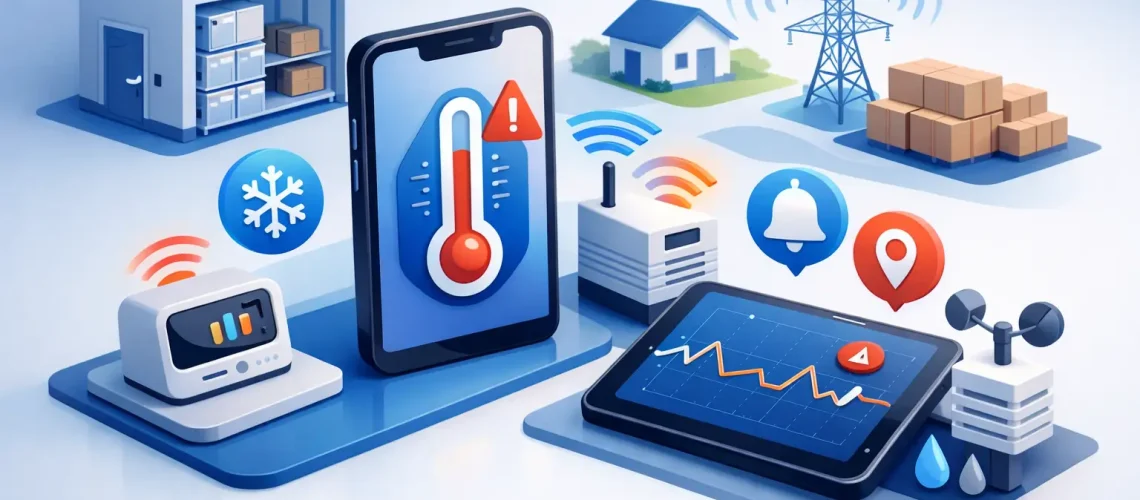

A walk-in cooler can move out of range overnight while the building is empty, product temperatures climb, and no one knows there is a problem until the first shift arrives. To implement remote temperature alerts effectively, a facility needs more than a sensor that sends a text message. It needs a monitored system designed around the equipment, the product risk, the operating schedule, and the people responsible for responding.
For grocery, food service, cold storage, medical, biotech, and institutional facilities, temperature monitoring is a practical layer of loss prevention. The right alert strategy can help teams respond before inventory is compromised, a compressor failure becomes a shutdown, or an inefficient refrigeration condition turns into an avoidable utility expense.
Start With the Failure Modes That Matter
Remote alerts are only useful when they identify a condition that requires action. A single high-temperature notification may indicate a door left open, a defrost cycle, a failed evaporator fan, refrigerant loss, a dirty condenser, or a compressor issue. Those scenarios do not carry the same urgency, and treating them all the same creates alarm fatigue.
Begin with an on-site review of each refrigerated space and system. Document the product stored, required temperature range, operating hours, refrigeration equipment type, existing controls, and likely points of failure. A floral cooler has different exposure than a vaccine refrigerator. A high-traffic restaurant walk-in has different door-opening patterns than a locked pharmaceutical storage room.
This assessment should also identify where temperature is measured today. A sensor mounted near an evaporator coil can read significantly differently from the product zone. If the goal is product protection, sensor placement must reflect the actual air and product conditions that matter to operations, not simply the most convenient wiring location.
How to Implement Remote Temperature Alerts Without Alarm Fatigue
The best alert systems are built around escalation, not noise. Teams need to know what happened, where it happened, how serious it is, and what action is expected. An alert that says only “high temperature” leaves too much interpretation to an already busy manager or technician.
Set alarm thresholds based on product requirements and equipment behavior. Include a delay so a brief door opening or normal defrost cycle does not generate a critical event. The correct delay varies by application. A tightly controlled medical refrigerator may require a short response window, while a large walk-in freezer may need logic that distinguishes a transient condition from sustained temperature rise.
Alert severity should be tiered. A warning can notify the on-site team that a condition needs review. A critical alarm can trigger escalation to maintenance leadership, a service provider, or both when the temperature remains outside limits or rises at an abnormal rate. Communications also need to account for staffing. If a store manager receives an alert at 2:00 a.m. but has no authority or access to address it, the notification path has failed.
A well-designed program typically defines four things for every alarm condition:
- The normal operating range and the threshold that starts the alert timer
- The time delay before the condition is treated as an actionable event
- The primary and secondary contacts responsible for response
- The required action, documentation, and escalation path if conditions do not recover
That framework turns monitoring into an operating process rather than a stream of disconnected messages.
Use More Than a Single Temperature Reading
Temperature is the outcome facilities care about, but it is not always the earliest warning sign. A remote monitoring strategy becomes more valuable when it observes the operating conditions that influence temperature performance.
For example, a rising box temperature combined with a long compressor runtime can point to a capacity problem. High head pressure may indicate condenser fouling, poor airflow, or another condition that increases energy use and equipment strain. Repeated door alarms can reveal an operational issue that no refrigeration repair will solve. Loss of communication or power should also be treated as an alarm condition, because a system cannot protect inventory if it is no longer reporting.
This is where engineered monitoring and intelligent controls provide a meaningful advantage over basic standalone devices. By combining temperature trends with equipment status, defrost activity, door position, pressure, and runtime data where appropriate, facilities can investigate the cause of an event instead of reacting only after temperatures have reached a critical point.
The trade-off is complexity. Not every application needs every data point. A small single-door refrigerator may benefit from dependable temperature and power-loss monitoring, while a multi-compressor rack serving numerous cases warrants deeper control and performance visibility. The monitoring scope should match the consequence of failure and the facility’s ability to act on the information.
Build Communication Around Real Response Capacity
A remote alert is not resolved because someone acknowledged it. The system should support a clear path from notification to corrective action.
For single-site operations, that may mean alerting the manager on duty first, then escalating to maintenance if the alarm persists. For multi-site organizations, central facilities teams may need dashboard visibility across locations, while local teams receive alerts requiring immediate physical checks. Critical systems may require direct notification to an approved refrigeration service partner after a defined delay or a severe equipment alarm.
Every response plan should answer practical questions. Who can enter the space after hours? Who can move product? Who is authorized to reset equipment? When should a technician be dispatched? What temperatures or durations require product-quality review? Written procedures reduce delays when an alert arrives during a shift change, weekend, or holiday.
Facilities should test those procedures instead of assuming they work. Simulate a high-temperature event, a power failure, and a communications outage. Confirm that contacts receive the right message, that escalation occurs on time, and that staff understand the next step. Testing is especially important after changes in personnel, site ownership, operating hours, or equipment layout.
Make Trend Data Part of Maintenance Planning
The immediate value of remote temperature alerts is obvious: faster response to a potential loss event. The longer-term value comes from the data collected between alarms.
A temperature trend that slowly worsens over several weeks may reveal declining refrigeration capacity before inventory reaches an unsafe range. Increased compressor runtime can indicate an efficiency problem. Frequent temperature recovery delays after defrost may point to control settings, airflow restrictions, or maintenance needs. These patterns help facility teams schedule corrective work before a failure becomes urgent and expensive.
Monitoring data also improves accountability. Rather than debating whether a cooler “has been running warm,” managers can review the duration, timing, and frequency of deviations. That information supports better maintenance decisions, clearer service conversations, and stronger capital planning for aging equipment.
At Refrigeration Technologies, LLC, solutions such as ArtikControl™ are intended to connect field-level refrigeration performance with ongoing dashboard visibility and mobile notification. For facilities managing high-value inventory or several locations, that combination can provide a more useful operating picture than periodic manual temperature checks alone.
Avoid the Common Gaps in Remote Monitoring Programs
Many alert programs underperform for predictable reasons. Sensors are installed without validating placement. Thresholds are copied across unlike applications. Contacts are outdated. Alerts are sent without a response procedure. Or a dashboard is reviewed only after a major event.
Another common mistake is focusing entirely on high-temperature alarms. Low-temperature excursions can damage fresh produce, beverages, medications, and other sensitive inventory. Power interruptions, controller failures, open doors, and communications loss deserve equal consideration based on the application.
Cybersecurity and network reliability also require attention. Remote monitoring devices should be deployed with an intentional approach to connectivity, access permissions, backup communications where needed, and ongoing device health checks. A disconnected sensor may create a false sense of protection unless the system actively reports its own loss of communication.
Measure Results After Implementation
Once remote alerts are in place, review performance on a regular schedule. Look at alarm frequency, acknowledgement and response times, repeat events, temperature excursion duration, product-loss incidents, emergency service calls, and energy-related operating trends. The goal is not merely to receive fewer alarms. It is to reduce preventable events while ensuring meaningful alarms get prompt attention.
If a particular location produces repeated alerts, investigate the underlying condition. The answer may be equipment repair, revised defrost scheduling, better door discipline, sensor relocation, staff training, or a change in escalation rules. Monitoring should improve as the facility learns how each system behaves.
A remote temperature alert program earns its value in the quiet hours, when a developing refrigeration issue is identified early enough for someone to act. Design the system around that moment: the right measurement, the right threshold, the right person, and a response plan that protects both product and operations.