
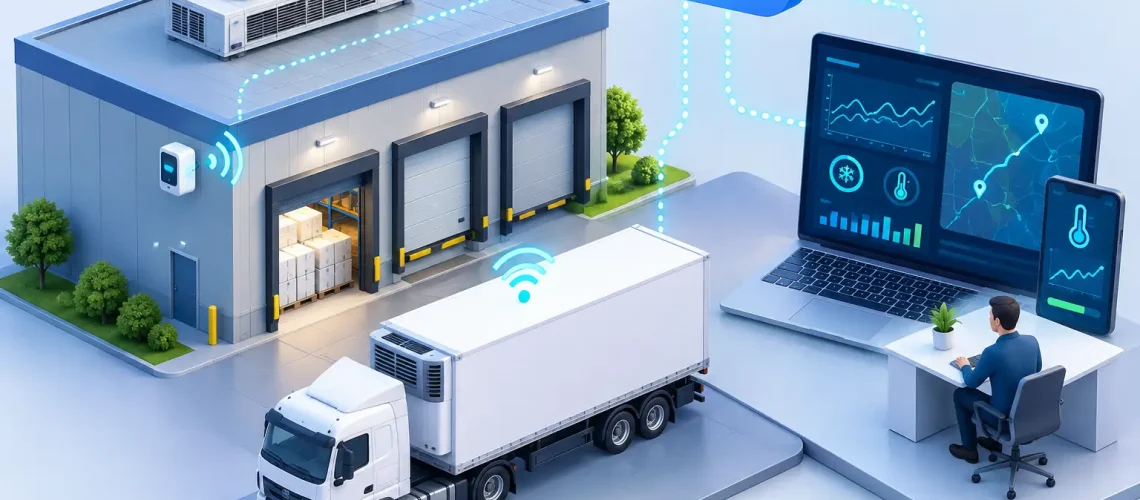

A walk-in cooler can be within temperature range at 8:00 a.m. and heading toward a product-loss event by noon. The difference is often hidden in data that no one is watching: a compressor running too long, a case temperature drifting, a suction pressure change, or a door left open after a delivery. So, what is refrigeration telemetry? It is the continuous collection, transmission, and analysis of refrigeration system data so facility teams can see developing problems and respond before they become failures.
For commercial operations, telemetry is not simply a temperature alarm. It is an operating intelligence layer for refrigeration assets. It gives owners, facility managers, maintenance teams, and energy leaders greater visibility into equipment health, product protection risks, and unnecessary energy use across one site or an entire portfolio.
What Is Refrigeration Telemetry?
Refrigeration telemetry uses connected sensors, controllers, communications hardware, and monitoring software to capture conditions inside a refrigeration system. Depending on the application, it can track box and case temperatures, suction and discharge pressures, compressor runtime, defrost cycles, refrigerant conditions, door activity, electrical demand, fan operation, and alarm events.
That information is sent to a dashboard or monitoring platform where it can be reviewed in real time, trended over time, and used to trigger alerts. A manager may receive a mobile notification when a freezer rises above its acceptable range. A service team may see that a rack has begun short-cycling or that a condenser is operating outside its normal pattern days before the system shuts down.
The distinction matters. A traditional alarm tells someone that a condition has already crossed a limit. Telemetry provides the operating context around that condition. It helps answer whether the event was isolated, whether it is getting worse, what equipment is involved, and what action is most likely to prevent disruption.
How Refrigeration Telemetry Works in a Commercial Facility
The process begins at the equipment level. Sensors and intelligent controllers collect readings from refrigerated cases, walk-ins, freezers, condensing units, compressor racks, evaporators, and related components. Data points are captured at scheduled intervals or in response to an operating event.
A communications gateway then transmits the information to a secure monitoring environment. There, the data is displayed through dashboards, historical trend charts, alarm logs, and equipment-specific views. Authorized users can review conditions from a computer or mobile device rather than relying solely on manual temperature checks or a technician standing at the equipment.
The most useful systems do more than display raw readings. They apply alarm logic and performance rules that distinguish normal variation from an exception requiring attention. For example, a brief temperature change during a delivery may not need escalation. A sustained temperature rise combined with extended compressor runtime and a failed defrost indication deserves immediate action.
This is where engineering matters. Alert thresholds, sensor placement, equipment sequencing, and response procedures must reflect the facility’s actual refrigeration design and operating requirements. A generic monitoring setup can create excessive nuisance alarms, leading staff to ignore notifications. A properly configured system prioritizes conditions that affect product safety, equipment reliability, and operating cost.
The Data That Helps Prevent Failures
Temperature is the most familiar refrigeration measurement, but it rarely tells the full story by itself. A cooler can hold temperature temporarily while a compressor, fan motor, control component, or refrigerant circuit is operating inefficiently. By the time temperature rises, the underlying issue may be more expensive to correct.
Telemetry provides earlier indicators. Extended compressor runtime can point to poor heat rejection, refrigerant issues, failing components, or a refrigeration load that has changed. Repeated high-temperature alarms may reveal a door issue, an airflow restriction, or an undersized system. Irregular defrost patterns can contribute to ice buildup, poor coil performance, and elevated energy consumption.
Pressure and electrical data add another level of diagnostic value. When viewed alongside temperature trends, they can help identify whether a problem is mechanical, operational, or environmental. A facility team can make a more informed service decision instead of dispatching a contractor with limited information and waiting for onsite diagnosis.
Not every facility needs the same data set. A grocery store with multiple refrigerated cases, walk-ins, and rack systems needs visibility into many interconnected assets. A biotech or medical facility may place greater emphasis on tight temperature documentation, notification escalation, and continuous records. A cold storage operation may focus heavily on equipment runtime, door activity, and system performance under high load. The monitoring strategy should match the consequence of failure and the complexity of the refrigeration system.
From Reactive Repairs to Planned Action
Without telemetry, refrigeration maintenance is often driven by complaint calls, visible frost, warm product, or a complete equipment failure. This reactive approach can restore operation, but it provides little control over the timing, cost, or business impact of the repair.
Telemetry supports a more planned response. When a trend shows declining performance, a facility can schedule service before a failure occurs, order likely parts, and address the issue during an appropriate operating window. That can reduce emergency labor, avoid after-hours disruption, and limit the risk of inventory loss.
It also improves communication among operations, maintenance, and service providers. Rather than reporting that “the freezer is acting up,” a team can identify the affected asset, the duration of the condition, the relevant trend data, and the alarm history. That level of detail helps prioritize work based on operational risk.
There is a practical trade-off: telemetry does not eliminate the need for qualified refrigeration technicians. It makes their work more targeted. Sensors cannot replace a field inspection, correct a refrigerant leak, or repair a failed motor. They can provide earlier warning and clearer evidence so the right work is performed sooner.
Energy Management Is Part of the Value
Refrigeration is one of the largest energy loads in many food retail, food service, cold storage, and institutional facilities. Systems can consume excess energy long before they fail completely. A condenser that is not rejecting heat efficiently, evaporator fans running unnecessarily, poorly timed defrost cycles, and controls that are out of sequence can all increase utility spend.
Telemetry makes these performance patterns visible. By comparing runtime, temperatures, pressures, and energy-related data over time, facilities can identify assets that are working harder than they should. That insight can support operational adjustments, control upgrades, targeted maintenance, or engineered retrofits.
The savings opportunity depends on the existing system condition, local utility rates, operating hours, refrigeration load, and the improvements available. Not every alert represents a major energy project. Still, continuous data replaces assumptions with evidence, which is essential when prioritizing capital and maintenance budgets.
What to Look for in a Refrigeration Telemetry System
A useful system should be designed around action, not just data collection. Before selecting or expanding a telemetry program, facility leaders should consider four practical questions:
- Can the system monitor the equipment and conditions that create the greatest product-loss or downtime risk?
- Are alarms configured with sensible thresholds, escalation paths, and notification methods for the people who must respond?
- Does the dashboard provide historical trends that help diagnose recurring issues and validate repairs?
- Can the monitoring platform support future controls, optimization, and multi-site visibility as operational needs grow?
Integration is equally important. Some facilities need monitoring only. Others benefit from intelligent controls that can adjust equipment operation, coordinate defrost, manage setpoints, or improve system sequencing. The right approach depends on equipment age, controls architecture, regulatory requirements, operational goals, and the cost of an outage.
Refrigeration Technologies, LLC applies this engineering-first approach through monitoring and control solutions such as ArtikControl™. The objective is not to add technology for its own sake. It is to create actionable visibility that protects inventory, improves reliability, and supports measurable operating improvement.
A Better Way to Manage Refrigeration Risk
Refrigeration telemetry gives commercial facilities a clearer view of what their systems are doing between service visits. It turns temperatures, runtime, pressures, alarms, and operating events into information that can guide timely decisions.
For a facility where a single refrigeration failure can mean lost inventory, interrupted operations, regulatory exposure, or damaged customer trust, that visibility has real value. Start by identifying the assets whose failure would create the greatest business impact, then build monitoring around the signals that provide the earliest useful warning.