
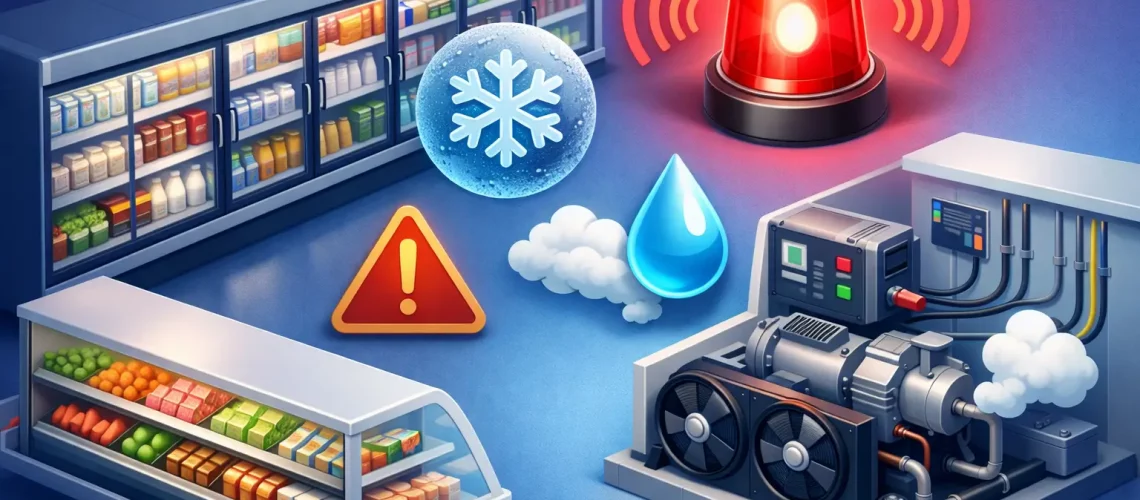

A refrigerated case can look fully stocked and normal at 8:00 a.m., then trigger a high-temperature alarm before the lunch rush. That is why understanding what causes supermarket refrigeration alarms matters beyond maintenance. Each alarm can signal a developing equipment failure, a product-protection risk, unnecessary energy consumption, or a control issue that needs attention before it becomes a store-wide event.
For supermarket operators, the question is not simply whether an alarm occurred. It is whether the alarm reflects an immediate threat, a recurring performance problem, or a nuisance condition that is masking more meaningful alerts. The right response starts with knowing what the alarm is measuring and what conditions can produce it.
What Causes Supermarket Refrigeration Alarms Most Often?
Most supermarket refrigeration alarms fall into a few core categories: temperature excursions, equipment operating faults, electrical or communication failures, and control or sensor errors. A single alarm may have one clear cause, but in interconnected rack systems, one issue can create alarms across multiple cases, walk-ins, and circuits.
A high-temperature alarm is the most familiar example. It indicates that a case, cooler, freezer, or product sensor has remained above its programmed limit for a specified time. That does not automatically mean product has been compromised. Door openings, stocking activity, defrost cycles, and a recent case cleaning can produce a temporary temperature rise. The risk depends on the temperature reached, how long it remained elevated, the product type, and whether the case recovered as expected.
Low-temperature alarms also deserve attention. They can point to an incorrect setpoint, a stuck valve, a control problem, or sensor placement that does not reflect true product conditions. In fresh-food cases, overcooling can damage produce, freeze dairy, degrade packaging, and raise energy use without improving food safety.
Door Openings, Airflow, and Store Operations
Open doors and disrupted airflow are common causes of short-duration alarms. A walk-in door left ajar, an improperly closing freezer door, damaged gaskets, or heavy receiving activity can quickly bring in warm, humid air. The refrigeration system then works harder to recover, often creating both a temperature alarm and an energy penalty.
Open multideck cases have their own airflow vulnerabilities. Product stacked above the load line, blocked return-air grilles, missing night curtains, or improperly positioned shelving can interrupt the air curtain that keeps conditioned air in the case. A case may appear cold at the discharge grille while product at the front edge warms beyond specification.
These operational causes are not minor when they repeat. A recurring alarm during deliveries or overnight stocking may indicate a process issue, but it may also expose weak door hardware, poor case loading practices, or insufficient recovery capacity.
Defrost Problems and Ice Accumulation
Defrost is necessary, particularly in low-temperature applications, but a poorly timed or incomplete defrost cycle can cause alarm conditions. If a case does not initiate defrost, does not terminate correctly, or remains in defrost too long, temperatures can move outside their acceptable range.
Ice accumulation on an evaporator coil restricts airflow and reduces heat transfer. The system may continue running while the case struggles to maintain temperature. Over time, the condition can trigger high-temperature alarms, increase compressor runtime, and create uneven product temperatures. Failed defrost heaters, termination sensors, drain restrictions, fan problems, and incorrect controller settings can all contribute.
The trade-off is clear: aggressive defrost scheduling can waste energy and expose product to unnecessary temperature swings, while inadequate defrost allows frost to compromise performance. Defrost strategies should be based on application conditions, equipment behavior, and monitored results rather than a one-size-fits-all schedule.
Mechanical Refrigeration Failures
Mechanical issues are among the most serious causes of supermarket alarms because they can affect multiple loads at once. A compressor failure, fan motor failure, refrigerant leak, restricted expansion device, failed solenoid valve, or condenser problem can reduce capacity until temperatures rise.
Condenser performance is a frequent contributor, especially during hot weather. Dirty coils, failed condenser fans, inadequate clearance, high ambient temperatures, and water-management issues on evaporative equipment can raise head pressure and force compressors to work harder. If capacity falls below demand, cases may begin alarming even though the rack is still operating.
Refrigerant charge problems are another concern. A low charge may result from a leak and can cause poor cooling, long runtimes, and unstable case temperatures. Adding refrigerant without identifying the source of a leak may provide short-term relief but does not solve the performance or compliance issue.
Power, Communication, and Controller Faults
Not every alarm is a refrigeration failure. Power interruptions, tripped breakers, loose electrical connections, phase-loss conditions, and generator transfer events can trigger alarms even if the equipment resumes operation afterward. Those events still need review because repeated power quality issues can shorten equipment life and create avoidable product risk.
Modern supermarkets also depend on controllers, networks, and remote monitoring infrastructure. A communication-loss alarm may mean a controller is offline, a network connection has failed, or a gateway has lost power. The refrigeration circuit may still be operating, but the store has lost visibility into its condition. In a multi-site operation, that loss of visibility is itself a material risk.
Sensor failures can create misleading alarms as well. A damaged probe, loose connection, moisture intrusion, calibration drift, or poor sensor location can report a temperature that does not match actual product conditions. Before dismissing an alarm as a bad sensor, however, the team should compare readings, inspect the equipment, and verify whether the sensor is revealing a localized problem.
Why Alarm Patterns Matter More Than Single Events
A single alarm provides a moment in time. Alarm history shows the operating story. Repeated high-temperature alarms on the same case, for example, may be caused by a failing fan motor, a marginal expansion valve, repeated loading issues, or an alarm delay that is too tight for normal operations. A case that recovers more slowly every week may be signaling a developing mechanical problem long before it reaches a critical failure point.
Patterns across several assets can be even more revealing. Multiple cases alarming during afternoon peak temperatures may point to condenser capacity, head-pressure control, or a rack-level issue. Several cases on one circuit alarming after defrost may indicate a shared control sequence or valve problem. These relationships are difficult to identify when alarms are handled only as isolated service calls.
This is where continuous monitoring changes the maintenance approach. An effective platform captures temperatures, alarm duration, recovery time, compressor and fan behavior, defrost performance, and system conditions. Instead of responding only after a critical alarm, facilities teams can identify assets that are drifting out of normal operating ranges and prioritize service before inventory is threatened.
How to Respond When a Refrigeration Alarm Occurs
The first action should be to verify the condition without delaying a potentially urgent response. Confirm the affected asset, review the current and historical temperature, inspect door position and product loading, and determine whether the unit is cooling or continuing to warm. For high-risk products or extended excursions, follow the facility’s documented food-safety and product-disposition procedures.
Next, determine the scope. Is the alarm isolated to one case, or are other cases, walk-ins, or rack circuits showing similar behavior? A single affected case may require local inspection of fans, airflow, sensors, and controls. Multiple alarms may indicate a central refrigeration, electrical, or communication issue that should be escalated immediately.
Alarm settings also need periodic review. Thresholds and time delays should be tight enough to protect product but practical enough to avoid false alarms during normal defrost, cleaning, stocking, and door activity. Overly sensitive alarms create alert fatigue. Alarms that are too delayed can leave too little time to protect inventory. The correct settings depend on the application, product sensitivity, equipment design, and operational schedule.
Preventing Alarm Events Before They Become Loss Events
Preventive maintenance remains essential: clean condensers, inspect door gaskets, verify airflow, test defrost components, check electrical connections, and maintain sensors. But scheduled maintenance alone cannot catch every developing issue between visits.
Predictive monitoring provides the missing operational layer. Refrigeration Technologies, LLC uses engineered monitoring and control strategies to help facilities identify abnormal temperature trends, performance degradation, and equipment conditions early. Mobile alerts and dashboard visibility allow the right people to assess severity, coordinate response, and focus service resources where they will protect the most value.
The goal is not to eliminate every alarm. Some alarms appropriately reflect normal operating events or momentary disturbances. The goal is to make every alarm meaningful, actionable, and connected to a response plan that protects product, reduces downtime, and avoids unnecessary energy waste.
A supermarket refrigeration alarm is often the first visible symptom of a larger condition. Treating it as operational data rather than background noise gives facility teams time to act while the problem is still manageable.