
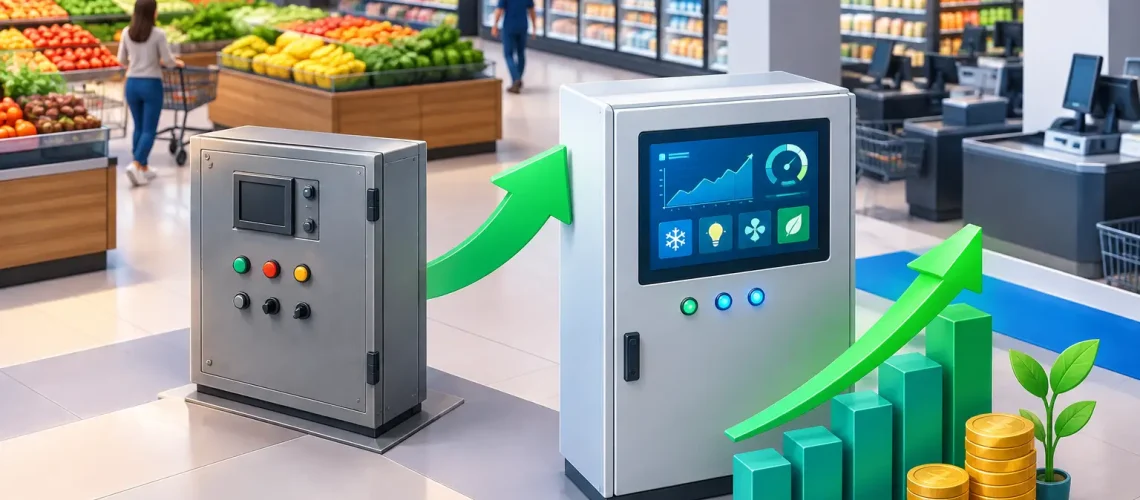

A refrigerated case running a few degrees too warm may not trigger a crisis at 8:00 a.m. By the afternoon, however, a failed fan, a short-cycling compressor, or an unnoticed defrost issue can put product quality, labor schedules, and store margins at risk. The decision to upgrade supermarket controls is not simply a question of replacing aging hardware. It is a way to gain earlier warning, tighter operational control, and a clearer picture of what refrigeration assets are costing the business.
For supermarkets, refrigeration is both a major utility expense and a direct product-protection system. Legacy controls can keep equipment operating, but they often leave managers reacting to alarms after conditions have already deteriorated. A well-designed controls upgrade shifts the approach toward measured performance, intelligent response, and continuous oversight.
Why Legacy Store Controls Create Hidden Costs
Many supermarkets operate a mix of refrigeration equipment installed over several decades. Cases, walk-ins, condensing units, rack systems, and controllers may have been replaced at different times and configured by different contractors. The result is often a system that functions, but does not operate as one coordinated refrigeration plant.
Older control strategies commonly rely on fixed schedules, broad pressure targets, limited sensor coverage, and local alarm annunciation. These arrangements make it difficult to distinguish a normal operating change from an emerging failure. They can also force equipment to run harder than necessary during low-load conditions, cool weather, or overnight hours.
The cost is not limited to the electric bill. Poorly controlled refrigeration can contribute to compressor wear, excessive service calls, nuisance alarms, temperature excursions, and avoidable product loss. For multi-store operators, inconsistent controls also make it harder to compare performance across locations and determine which sites need attention first.
When to Upgrade Supermarket Controls
The right timing depends on equipment condition, store priorities, and the visibility already available to the facilities team. Still, several conditions indicate that an upgrade deserves immediate evaluation.
A store may have recurring temperature alarms without a clear root cause. Service technicians may be responding to the same cases, walk-ins, or rack components repeatedly. Energy usage may be rising even though operating hours and sales volume have not changed substantially. In other cases, the controls work locally but provide no reliable way to see conditions remotely after hours.
An upgrade is also appropriate when a supermarket is replacing compressors, condensers, cases, or rack equipment. New mechanical equipment paired with outdated controls will not deliver its full efficiency or reliability potential. Controls should be reviewed alongside capital improvements, not treated as an afterthought once installation is complete.
For operators with multiple stores, lack of standardization is another strong signal. If each location uses a different alarm process, setpoint approach, or monitoring method, facilities personnel spend more time chasing information and less time preventing failures.
The strongest business case is often prevention
A controls project should not need a catastrophic loss event to justify itself. The value comes from identifying conditions that lead to failures before they become emergencies. A sustained temperature drift, repeated high-head pressure condition, or compressor runtime pattern may point to a problem while there is still time to schedule a targeted repair.
That proactive window matters. Planned service is generally less disruptive and less expensive than an emergency response involving spoiled inventory, overtime labor, and a store manager trying to protect customers and product at the same time.
What a Modern Controls Upgrade Should Deliver
A useful upgrade begins with the operating outcomes the store needs, then selects control and monitoring capabilities to support them. More data alone is not the goal. The goal is actionable information that helps teams protect temperatures, reduce waste, and make better maintenance decisions.
At a minimum, a modern supermarket controls strategy should improve temperature management, alarm prioritization, equipment sequencing, and remote visibility. Sensors and controllers should be placed and configured to reflect the actual refrigeration system, including critical cases, walk-ins, suction groups, discharge conditions, defrost functions, and other points that affect reliability.
Remote dashboards allow authorized teams to review live conditions, historical trends, and recurring alarm activity without waiting for a site visit. Mobile alerts can bring the right event to the right person quickly, while escalation procedures help prevent important alarms from being lost in a high-volume notification stream.
Control logic can also improve equipment operation. Floating head pressure, optimized suction pressure, demand-based defrost, condenser fan staging, and coordinated compressor sequencing may reduce unnecessary runtime when system design and operating conditions support them. The exact measures should be engineered for the store, because settings that improve one refrigeration plant may not be appropriate for another.
Alarm quality matters as much as alarm speed
A facility team cannot respond effectively when every minor fluctuation generates an urgent message. Excessive alarms create fatigue, and fatigue makes a real emergency easier to miss.
A well-configured platform separates actionable conditions from routine variation. It can apply appropriate delays, thresholds, escalation paths, and context to each monitored point. A brief door opening at a walk-in should not be treated the same way as a persistent rise in product temperature or a failing compressor circuit.
This is where engineering experience matters. Alarm logic needs to account for equipment type, store operations, temperature requirements, and the likely consequences of a failure. The objective is not fewer alarms at any cost. It is meaningful alarms that support a timely, informed response.
Start With an Assessment, Not a Product Specification
Controls upgrades can range from targeted monitoring additions to a full modernization of store refrigeration management. Starting with a product list may lead to a system that is technically capable but poorly matched to the facility.
A better process begins with an on-site assessment of the existing equipment, controls architecture, failure history, energy profile, and business risks. Decision-makers should understand which systems are most critical, where temperature visibility is limited, which alarms recur, and which assets are driving disproportionate maintenance expense.
The assessment should also examine communication infrastructure and cybersecurity requirements. Remote monitoring depends on reliable connectivity, but it must be deployed with clear access controls and a plan for long-term support. For a chain operator, the approach should account for how data will be organized and used across the portfolio.
Refrigeration Technologies, LLC approaches this work as a performance-improvement plan rather than a one-size-fits-all controls replacement. The right scope may include controller retrofits, sensor additions, engineered control changes, dashboard monitoring, and ongoing alert management through the ArtikControl™ platform.
Measuring Return Beyond Utility Savings
Energy reduction is a primary reason to modernize controls, but it should not be the only metric. The strongest business case considers the full operational impact of better refrigeration visibility and control.
Track utility consumption before and after implementation while accounting for weather, store activity, and significant equipment changes. Review compressor runtimes, alarm frequency, temperature excursions, emergency service calls, and maintenance patterns. If the upgrade is intended to protect a high-value product category, include avoided product-loss risk in the evaluation.
Some benefits are straightforward to quantify. Others, such as faster diagnosis or fewer after-hours disruptions, may be less precise but are still operationally significant. A maintenance director who can see a developing issue remotely and dispatch the right technician with the right information is operating from a better position than one receiving a vague overnight call.
It also pays to set expectations realistically. Controls cannot correct undersized equipment, major refrigerant leaks, severely fouled condensers, or failing mechanical components on their own. They can reveal those problems sooner and help equipment operate more intelligently, but physical deficiencies still require repair or retrofit.
Build Controls Into the Store’s Reliability Plan
The best supermarket controls upgrades do not end at commissioning. Setpoints need review, alarm rules need refinement, and performance trends need regular attention. Stores change through remodels, case replacements, product mix shifts, staffing changes, and seasonal loads. The controls strategy should be able to adapt with them.
Give ownership of alarms and follow-up procedures clear definition. Train store and facilities teams on what they will see, what requires immediate action, and when to escalate. Then use historical data to identify repeat issues that deserve a permanent correction rather than another temporary service call.
A supermarket control system should provide more than proof that equipment is running. It should give leaders enough visibility to make decisions before a refrigeration issue becomes a product, energy, or customer-service problem.