
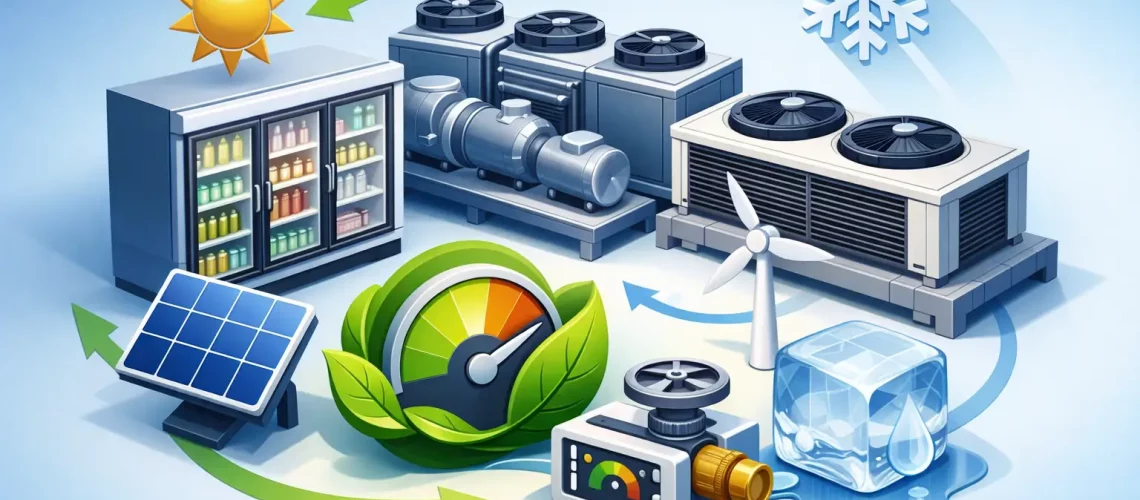

A refrigeration system rarely announces an energy problem with a single alarm. It shows up as longer compressor run times, rising utility bills, inconsistent case temperatures, nuisance service calls, and equipment that seems to work harder every month. The top refrigeration energy conservation measures address those conditions at their source while protecting product, uptime, and operating budgets.
For grocery stores, cold storage operations, food service facilities, medical environments, and other refrigeration-dependent sites, energy reduction cannot come at the expense of temperature control. The best results come from an engineered approach: establish how the system is performing, correct the highest-impact deficiencies, and maintain visibility after the work is complete.
Top Refrigeration Energy Conservation Measures That Deliver Results
Start with system performance, not a generic retrofit list
Two facilities with similar equipment can have very different energy profiles. One may have excessive suction pressure losses, another may be fighting condenser fouling, and a third may be using poorly coordinated defrost schedules. Replacing equipment before identifying the actual source of waste can produce disappointing returns.
A facility assessment should establish baseline energy use, temperature performance, refrigerant condition, compressor cycling, defrost activity, condenser operation, and control settings. It should also consider business conditions that affect load, including store hours, delivery schedules, door traffic, ambient heat, and seasonal demand.
This baseline turns energy conservation from a general objective into a prioritized improvement plan. It also gives facility teams a way to verify savings after upgrades are made.
Optimize floating head and suction pressure controls
Compressor systems consume more energy than necessary when they operate at fixed pressure targets regardless of actual conditions. Floating head pressure control allows condensing pressure to drop as outdoor conditions become more favorable. Floating suction pressure raises suction pressure when case and room temperatures allow it.
Both strategies can materially reduce compressor lift and energy use. They are not set-and-forget adjustments, however. Pressure targets must account for the warmest circuit, product temperature requirements, system capacity, refrigerant type, and the reliability of existing controls. A poorly applied floating strategy can create temperature instability or leave inadequate capacity during peak load periods.
The opportunity is especially strong when intelligent controls can continuously respond to operating conditions rather than rely on seasonal manual adjustments. Better control logic also reduces the tendency to over-compress simply to provide a perceived margin of safety.
Keep heat transfer surfaces clean and operating as designed
A condenser that cannot reject heat efficiently forces compressors to run at higher head pressure. A frosted evaporator restricts airflow and heat transfer, increasing run time while reducing temperature control. These problems are common, visible, and frequently underestimated because the system may continue operating until energy costs and service needs become substantial.
Condenser coil cleaning, fan inspection, airflow verification, and routine removal of debris around outdoor equipment are foundational measures. In high-grease, dusty, or pollen-heavy environments, the appropriate maintenance frequency may be far greater than an annual schedule.
Inside refrigerated spaces, evaporator coils, fan motors, drain pans, and airflow paths deserve the same attention. A blocked air path can create warm zones that lead operators to lower setpoints, wasting energy across the entire system to solve a localized airflow problem.
Control defrost based on need
Defrost is necessary, but unnecessary defrost adds heat to the refrigerated space, increases compressor load, and may create avoidable product temperature swings. Time-clock defrost schedules are often based on conservative assumptions rather than actual frost accumulation.
Demand defrost controls use operating data to determine when a coil needs defrosting. Depending on the application, they may evaluate coil temperature, pressure differential, fan operation, door activity, or compressor runtime. Reducing unnecessary cycles lowers defrost heater energy and avoids the pull-down load that follows each event.
The trade-off is that demand defrost must be configured for the application and monitored carefully. Freezers, high-humidity rooms, frequently opened walk-ins, and systems with inconsistent door discipline may need more conservative parameters than low-traffic applications.
Reduce infiltration at doors, cases, and penetrations
Every pound of warm, humid air entering a cooler or freezer becomes a refrigeration load. Infiltration also drives frost buildup, increases defrost demand, and can make a system appear undersized when the real issue is the building envelope.
Door closers, strip curtains, high-speed doors, tight gaskets, properly maintained automatic doors, and insulated panels all have a role. Open display cases may benefit from night covers when operating schedules permit, while glass-door retrofits can reduce load and improve product visibility in the right merchandising environment.
The operational details matter. A damaged walk-in door gasket can waste energy continuously. A dock door left open during receiving may overwhelm the benefit of more sophisticated controls. Energy conservation works best when equipment improvements are matched with practical operating procedures.
Upgrade inefficient fans, motors, and lighting
Evaporator and condenser fans often run for long hours, making them worthwhile targets for efficiency upgrades. Electronically commutated motors can reduce fan energy, improve speed control, and generate less heat inside the refrigerated envelope than older motor designs. Variable-speed fan control can further reduce energy use when full airflow is not required.
Lighting upgrades provide a second benefit. LEDs consume less energy than legacy lighting and introduce less heat into refrigerated cases, walk-ins, and storage rooms. Occupancy sensors can add savings in intermittently used spaces, although sensor settings should never compromise safe access or required visibility.
These measures are typically easier to implement than major rack replacements, but they should still be evaluated as part of the whole system. For example, changing fan speed can affect coil performance, refrigeration capacity, and temperature uniformity.
Fix refrigerant leaks and protect the charge
A refrigeration system can remain operational with a low refrigerant charge, but it will not perform efficiently. Leaks can increase compressor runtime, reduce capacity, cause poor superheat control, and accelerate wear. They also create compliance, environmental, and product-risk concerns.
Leak detection, timely repair, accurate charging, and verification of expansion device performance should be part of every energy plan. The goal is not merely to restore operation after a failure. It is to maintain stable, efficient performance before a small loss becomes a major repair or inventory event.
Use continuous monitoring to sustain savings
Energy-saving measures lose value when setpoints drift, a condenser fan fails, a door is damaged, or an alarm is noticed only after product temperatures rise. Continuous monitoring helps facility teams see the early indicators: abnormal runtime, rising discharge pressure, repeated defrost events, temperature excursions, or equipment operating outside expected ranges.
For multi-site operators, this visibility is particularly valuable. Centralized dashboards and mobile alerts can direct maintenance attention to the locations and assets with the highest risk or greatest energy opportunity. Refrigeration Technologies, LLC uses monitoring and intelligent control platforms, including ArtikControl™, to help facilities move from reactive service to measurable, ongoing performance management.
Monitoring does not replace qualified technicians. It makes their work more targeted by providing operating context before they arrive on site. That can reduce diagnostic time, prevent repeat calls, and help confirm whether a completed repair delivered the expected result.
Prioritize Measures by Risk, Load, and Return
The right project sequence depends on facility conditions. A site with dirty condensers, leaking doors, and poorly maintained equipment should correct those fundamentals before pursuing advanced control strategies. A well-maintained facility with high utility demand may see greater value from floating-pressure controls, demand defrost, variable-speed components, and continuous monitoring.
Capital planning should also account for equipment age and failure risk. Extending the life of a viable system through controls and targeted retrofits can be financially sound. Conversely, repeated compressor failures or obsolete components may justify a larger modernization project. The decision should be based on lifecycle cost, product risk, service history, and verified operating data, not purchase price alone.
Energy efficiency in commercial refrigeration is not a one-time project. It is a disciplined operating standard: measure the system, correct the waste, verify the result, and keep watching the conditions that can erode performance. That approach protects more than utility spend. It protects the inventory, uptime, and confidence your operation depends on.