
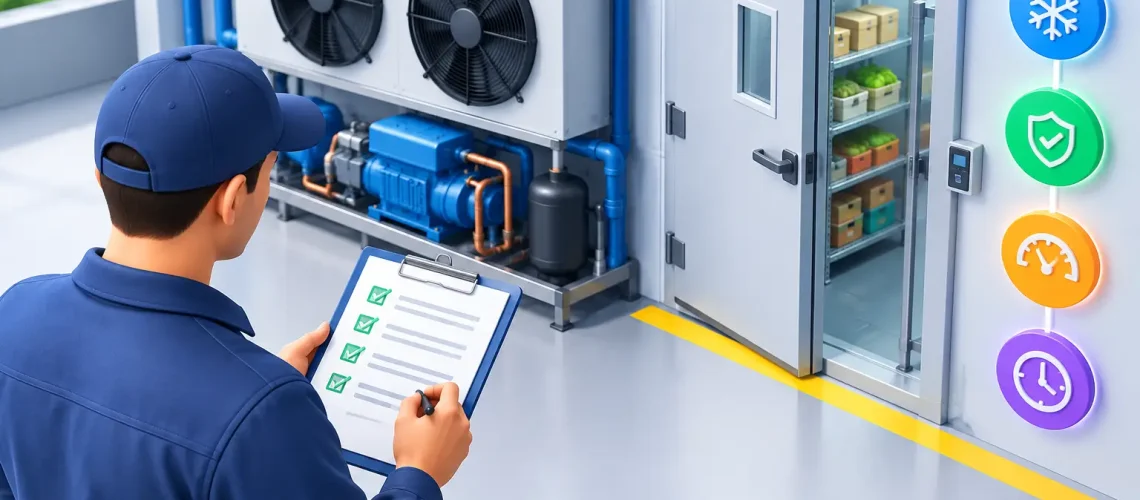

A refrigeration failure rarely begins with a dramatic alarm. More often, it starts with a drifting suction pressure, a door that no longer closes tightly, a condenser that is slowly fouling, or a control setting that no longer matches the load. A disciplined refrigeration audit checklist gives facility teams a way to find those conditions before they become product loss, emergency labor, customer disruption, or a major equipment expense.
For grocery, food service, cold storage, medical, and other mission-critical facilities, the audit should do more than identify broken components. It should establish how the entire system is performing, where energy is being consumed, which risks demand immediate attention, and what can be planned into a cost-effective improvement program.
Why a Refrigeration Audit Matters
Reactive maintenance can restore cooling after a failure, but it does not explain why the failure occurred or whether similar conditions exist elsewhere in the facility. An audit creates that operational baseline. It connects equipment condition, temperature performance, energy use, controls, maintenance history, and alarm response into one clear picture.
That distinction matters when refrigeration supports perishable inventory or regulated products. A walk-in cooler that holds temperature today may still have a weak evaporator fan, repeated high-temperature alarms, excessive compressor cycling, or an overloaded condensing unit. Each issue carries a different level of risk and a different financial consequence.
A useful audit also prevents teams from treating every finding the same way. A leaking door gasket may be a fast, low-cost correction. A poorly staged compressor rack, aging controller, or oversized electric defrost schedule may require engineering review because the right solution depends on load profile, equipment age, refrigerant type, operating hours, and the facility’s capital plan.
Refrigeration Audit Checklist: Start With Operating Facts
Begin with the information that explains how the system is expected to operate. This portion of the audit should cover each refrigerated case, walk-in, freezer, rack, condensing unit, evaporator, and remote monitoring point. Record the equipment make, model, age, refrigerant, design temperature, actual temperature range, and the products being protected.
Maintenance records are equally valuable. Review service calls from the last 12 to 24 months, including refrigerant additions, compressor replacements, fan motor failures, recurring alarms, defrost issues, and temperature excursions. Repeated repairs are often a sign of an underlying controls, airflow, loading, or capacity problem rather than isolated bad luck.
Utility data should also be part of the starting review. Compare electric consumption and demand trends against production levels, occupancy, weather, store operating hours, or seasonal inventory changes. A higher bill does not automatically mean refrigeration is at fault, but a sudden or persistent change can help direct field testing toward the right equipment.
Confirm the Critical Temperature Requirements
Each zone needs a documented temperature target, acceptable range, alarm threshold, and response procedure. These values should reflect product requirements, food safety protocols, medical storage standards, or internal quality controls, not a generic setpoint applied across the facility.
Confirm where temperatures are being measured. A sensor located near an evaporator discharge or directly in the path of warm door infiltration may not represent product temperature. Sensor placement, calibration, and alarm delay settings determine whether operators receive a useful early warning or a stream of nuisance alerts that eventually get ignored.
Inspect the System From Heat Rejection to Product Space
A complete field inspection follows the refrigeration cycle and the airflow path. That method keeps the audit focused on system performance instead of a disconnected list of components.
At the condenser, inspect coil cleanliness, fan operation, motor condition, airflow clearance, head-pressure behavior, electrical connections, vibration, and signs of refrigerant leaks. A dirty or obstructed condenser can increase compression ratios, raise energy consumption, and shorten compressor life. In outdoor installations, also check for recirculated hot air, damaged coil fins, and weather-related deterioration.
At compressor racks and condensing units, document suction and discharge pressures, superheat, subcooling, oil levels, compressor staging, run hours, current draw, and evidence of short cycling. Verify that pressure controls and variable-capacity devices respond as intended. A system that appears stable during a brief inspection may show inefficient staging or unstable suction control when demand changes through the day.
Use the following field checks to organize inspection work across the system:
- Inspect refrigerant piping, valves, insulation, and fittings for leaks, oil staining, physical damage, and condensation.
- Verify evaporator coil condition, fan motor operation, drain pan cleanliness, drain line flow, and ice accumulation.
- Check defrost schedules, termination controls, heaters, and drip times against the actual frost load in each space.
- Test door closers, gaskets, strip curtains, automatic doors, panel seals, and dock interfaces for infiltration.
- Review electrical panels, disconnects, contactors, safeties, sensors, and controller wiring for overheating, corrosion, or unreliable connections.
These checks are most valuable when findings are recorded by asset and location. “Replace several gaskets” is difficult to budget and verify. “Replace the torn freezer door gasket at Door 3, where ice buildup and elevated runtime are occurring” creates a clear work order and a measurable result.
Verify Case, Cooler, and Freezer Performance
The protected space is where refrigeration performance becomes a business outcome. Measure air temperature, product temperature when appropriate, humidity, recovery time after door openings, and temperature consistency across the space. Walk-ins and freezers should be checked at multiple locations, especially around doors, evaporators, and high-load storage areas.
For display cases, evaluate discharge air, return air, product loading, night covers, lighting heat, airflow obstructions, and the condition of the evaporator section. Overstocking a case can block designed airflow and create warm product zones even when the controller reports an acceptable average temperature.
Pay close attention to frost and moisture. Frost on an evaporator, sweating on piping, floor ice near a doorway, or condensation around case frames can reveal infiltration, defrost, drainage, insulation, or control issues. The visible symptom may be small, but the energy penalty and safety exposure can grow quickly.
Review Controls, Alarms, and Monitoring Data
Controls determine how efficiently the equipment responds to changing conditions. During the audit, compare actual control sequences with the facility’s needs. Review setpoints, floating suction or head-pressure strategies, anti-sweat heater controls, defrost logic, fan cycling, demand response settings, and compressor staging.
The goal is not to reduce run time at the expense of product protection. It is to remove unnecessary energy use while preserving stable temperatures and reliable recovery during peak loads. For example, reducing defrost frequency may save energy in a lightly loaded freezer, but it can create coil blockage if the frost load is significant. The correct setting depends on observed conditions and monitored performance.
Alarm management deserves the same scrutiny. Determine which alarms occur most often, who receives them, how quickly they are acknowledged, and whether escalation occurs when a condition remains unresolved. Continuous monitoring platforms such as ArtikControl™ can help teams move from occasional manual readings to trend-based decisions, mobile alerts, and earlier intervention when temperatures, pressures, or equipment behavior begin to drift.
Rank Findings by Risk and Return
An audit should end with priorities, not a stack of observations. Classify findings by product risk, safety risk, likelihood of failure, energy impact, repair cost, and operational disruption. A failed door closer and a failing compressor may both be important, but they require different response timelines and approval paths.
Immediate items usually include active temperature exposure, refrigerant leaks, electrical hazards, failing motors, unreliable safety controls, and conditions that could cause imminent product loss. Near-term work may include coil cleaning, gasket replacement, drain repairs, sensor calibration, control adjustments, and preventive maintenance corrections. Capital recommendations may involve rack upgrades, high-efficiency motors, control retrofits, case modernization, or monitoring infrastructure.
For each recommendation, document the expected operational benefit. That may be fewer temperature excursions, lower compressor runtime, reduced service calls, improved alarm response, extended equipment life, or measurable energy savings. Exact savings should be estimated from site conditions and verified after implementation, not assumed from a generic calculation.
Turn the Audit Into an Ongoing Performance Plan
A refrigeration audit is most useful when it becomes the basis for a continuing performance program. Assign owners and due dates for corrective work, photograph major deficiencies, establish baseline readings, and verify that repairs resolved the original condition. Then review monitored data after the work is complete to confirm stable temperatures, expected run times, and improved alarm behavior.
Facilities with multiple locations benefit from using the same audit format across sites. Consistent records make it easier to identify recurring equipment problems, compare energy performance, standardize maintenance expectations, and direct capital dollars where they will have the greatest effect.
The best next step is not simply to check every box. It is to use what the checklist reveals to protect inventory, reduce avoidable energy use, and give your team enough visibility to act before a small refrigeration issue becomes an operational emergency.