
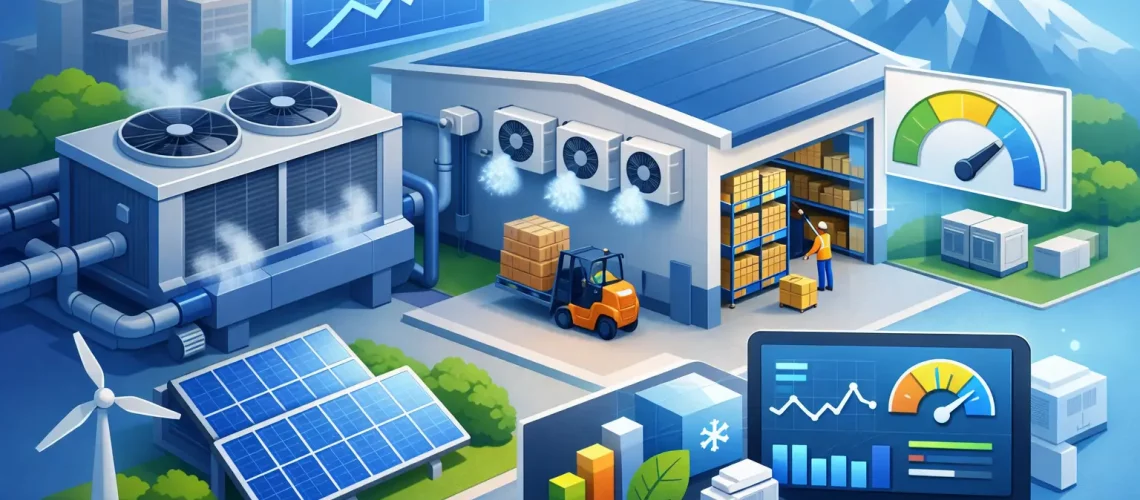

A cold room that holds temperature most of the day can still be wasting money every hour. In many facilities, the warning signs are subtle at first – longer compressor run times, uneven box temperatures, frost buildup, nuisance alarms, or rising utility bills that never quite trace back to one obvious failure. That is where cold storage refrigeration optimization becomes a business decision, not just a maintenance task.
For operators responsible for product integrity, uptime, and energy performance, optimization is about getting more from the system already in place while knowing when a retrofit, controls upgrade, or equipment change will produce a measurable return. The goal is not simply colder air. The goal is stable temperatures, lower energy consumption, fewer emergency calls, and better visibility into system health before inventory is at risk.
What cold storage refrigeration optimization actually means
In practice, optimization is the process of aligning refrigeration equipment, controls, defrost strategy, airflow, and monitoring so the system performs efficiently under real operating conditions. That matters because cold storage facilities rarely operate under textbook conditions. Door openings fluctuate, product loads change, ambient conditions shift, and equipment ages unevenly.
A system can technically run while still operating far outside its best performance range. Suction pressure may be set lower than necessary. Defrost may run too often or not often enough. Evaporator fans may move air poorly because of ice, motor wear, or blocked coils. Condensers may reject heat inefficiently due to fouling or control issues. Each of these problems adds cost, and several together can shorten equipment life while increasing the chance of product loss.
Optimization addresses those losses by looking at the full refrigeration process rather than treating each alarm or service call as an isolated event.
Why cold storage refrigeration optimization pays off
Most facilities begin this work for one of two reasons: energy spend has become difficult to control, or reliability has started to slip. The strongest programs address both.
Energy waste in cold storage is rarely caused by one dramatic problem. More often, it comes from layered inefficiencies. Compressors run harder than needed. Head pressure stays elevated. Defrost cycles consume power without improving coil performance. Setpoints are conservative in the wrong places and unstable in the places that matter most. Small operational gaps compound into meaningful monthly cost.
Reliability follows the same pattern. Equipment failures often appear sudden to the facility, but operating data usually tells a different story. Temperature drift, pressure instability, increased cycling, and longer runtimes tend to show up well before a case temperature alarm or a compressor outage. Facilities that optimize and monitor these patterns can intervene earlier, schedule repairs more intelligently, and avoid the high-cost cycle of reactive service.
For decision-makers, the financial logic is straightforward. Lower utility use matters, but so do reduced spoilage risk, fewer after-hours dispatches, longer equipment life, and better labor efficiency for in-house teams.
Where most cold storage systems lose performance
The first place to look is controls. Many refrigeration systems still operate with limited logic, outdated settings, or minimal visibility into how components interact. That does not always mean the hardware is failing. It often means the system is not adapting well to actual load conditions.
Setpoint strategy is another common issue. Lower is not always safer. Running suction pressure lower than necessary increases compressor energy and can create avoidable stress across the system. The right target depends on product requirements, facility use patterns, and evaporator performance.
Defrost is frequently mismanaged. Excessive defrost wastes energy and can create unnecessary temperature swings. Too little defrost restricts airflow, reduces heat transfer, and pushes equipment to work harder. The correct approach depends on moisture load, door traffic, room design, and product handling practices.
Airflow also gets overlooked. A room can have sufficient refrigeration capacity on paper and still struggle in operation if air distribution is uneven. Hot spots, blocked circulation, stacked product, damaged strip curtains, or fan issues can all compromise temperature consistency.
Then there is equipment condition. Dirty condensers, refrigerant charge issues, failing valves, weak sensors, and degraded insulation each chip away at performance. None of these should be judged in isolation. Their combined effect is where efficiency and reliability losses become significant.
Optimization starts with measurement, not guesswork
The most effective cold storage refrigeration optimization programs begin with a field-based assessment. That means looking at system configuration, operating trends, controls behavior, temperature stability, and equipment condition together. A single snapshot is useful, but trend data is what exposes hidden inefficiency.
If suction pressure drops every afternoon, if compressors short cycle during low-load periods, or if a room recovers slowly after normal door activity, those patterns point to correctable causes. Monitoring makes it possible to distinguish between a one-time event and a recurring performance problem.
This is where many facilities change their approach. Instead of waiting for failures, they use dashboards, alarms, and trend analysis to manage refrigeration as an operating asset. A predictive monitoring platform can identify exceptions earlier, shorten diagnosis time, and give facility teams a clearer basis for repair and capital decisions.
For multi-site operators, that visibility becomes even more valuable. Standardizing performance data across locations helps reveal which stores, warehouses, or critical rooms are drifting out of range and which equipment investments are producing the best return.
The highest-impact optimization moves
Not every facility needs a major system overhaul. In many cases, the biggest gains come from targeted improvements that address waste at the control and operational level.
Controls modernization is often near the top of the list. Smarter control logic can improve compressor staging, defrost scheduling, fan operation, alarm management, and system stability. It also creates a better foundation for remote monitoring and mobile alerts.
Sensor accuracy matters more than many operators realize. If temperature or pressure sensors drift, the control sequence makes decisions based on bad information. Replacing or recalibrating key sensors can improve both product protection and energy performance.
Condensing efficiency is another strong opportunity. Fan controls, condenser cleanliness, and ambient-responsive strategies can reduce unnecessary head pressure and compressor load. In some environments, this delivers meaningful savings without major disruption to operations.
Evaporator performance should be reviewed just as closely. Coil condition, fan health, defrost effectiveness, and airflow pathways determine how well the room absorbs heat. If that part of the system underperforms, the rest of the plant compensates at a cost.
Sometimes the right answer is retrofit work. In other cases, better monitoring and control solves most of the problem. The correct path depends on equipment age, current failure risk, utility rates, product sensitivity, and how much operational flexibility the site actually needs.
The trade-offs facility leaders need to weigh
Optimization is not about chasing the lowest possible energy number. Facilities that store temperature-sensitive food, pharmaceuticals, biotech materials, or other high-value inventory need a strategy that protects product first and improves efficiency within those limits.
That means there are trade-offs. Tighter temperature bands can increase energy use if the system is not designed or controlled properly. Aggressive energy-saving changes can create recovery problems in high-traffic rooms. Extending equipment life may justify a controls upgrade even if the immediate utility savings alone do not.
It also means capital planning should be realistic. Some facilities benefit from phased improvements rather than a single large project. An engineered assessment can identify what should be corrected now, what can wait, and which upgrades will produce measurable gains without interrupting operations.
This consultative approach is where a specialized refrigeration partner adds value. Companies such as Refrigeration Technologies, LLC work across assessment, retrofit, monitoring, and controls so the solution fits the facility instead of forcing the facility to fit a standard package.
Building a long-term optimization strategy
The strongest results come when optimization is treated as an ongoing process. Cold storage conditions change with seasonality, staffing, throughput, and equipment age. A project completed once and never reviewed will eventually lose ground.
A better model is continuous performance management. Start with a site assessment. Correct the highest-cost inefficiencies. Add monitoring that provides actionable alerts rather than noise. Use trend data to refine setpoints, maintenance timing, and replacement planning.
Over time, that approach changes how refrigeration is managed. Emergency calls become less frequent. Maintenance becomes more targeted. Energy use becomes easier to explain and improve. Most important, facility leaders gain confidence that a refrigeration issue will be seen earlier, diagnosed faster, and addressed before it becomes an inventory event.
Cold storage does not have to operate on a mix of caution and guesswork. When systems are engineered, monitored, and adjusted around actual operating conditions, they become more predictable, more efficient, and easier to trust. For organizations that depend on refrigeration every hour of the day, that kind of control is not a luxury – it is operating discipline.