
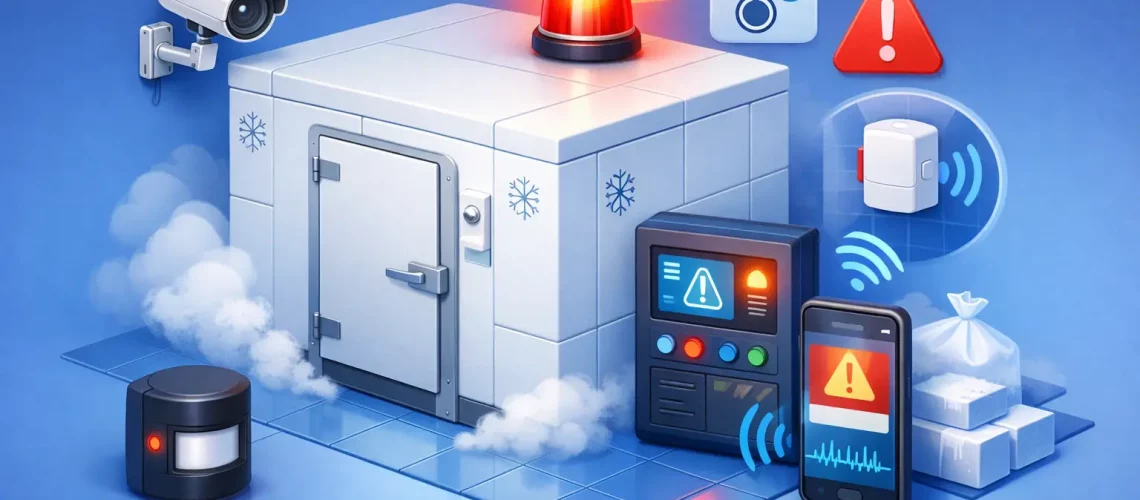

A freezer failure rarely starts as a dramatic event. More often, it begins with a small temperature drift at 2:15 a.m., a door left ajar during a delivery rush, or a condensing issue that goes unnoticed until inventory is already at risk. That is exactly why a walk in freezer alarm system matters in commercial environments. It gives facility teams a chance to act before a temperature problem turns into product loss, emergency service calls, or an operational shutdown.
For grocery stores, foodservice operators, cold storage facilities, schools, medical sites, and multi-site organizations, the question is not whether an alarm is useful. The real question is whether the system is engineered to catch the right problems early enough to make a difference.
What a walk in freezer alarm system should actually do
At a basic level, a walk in freezer alarm system monitors freezer conditions and alerts staff when temperatures move outside acceptable thresholds. That sounds simple, but in practice, effective alarming is more than a horn on the wall or a text message triggered by a single sensor.
A commercial freezer alarm system should monitor the condition of the box, identify abnormal trends, and deliver alerts to the right people fast enough for corrective action. If an alarm only sounds locally after staff have gone home, it may satisfy a checkbox but still fail operationally. If it sends too many nuisance alerts, teams start ignoring it. If it tracks only temperature without context, it may miss developing mechanical issues until the freezer is already compromised.
The best systems combine sensing, logic, communication, and visibility. Temperature is the obvious starting point, but door status, power status, defrost behavior, compressor performance, and alarm escalation all influence whether the system protects inventory or simply reports a failure after the fact.
Why simple alarms often fall short
Many facilities still rely on standalone temperature alarms with limited configuration. These setups can work in small, low-risk applications, but they tend to create blind spots in demanding operations.
One issue is alert timing. A freezer can cycle through normal temperature variation during defrost or loading periods. If alarms are set too tightly, staff receive false alarms and stop treating notifications as urgent. If set too loosely, the alert arrives too late to prevent product damage. The right threshold depends on the use case, the stored product, traffic patterns, and equipment behavior.
Another issue is visibility. A local buzzer does not help much during overnight hours or across a distributed portfolio of stores and facilities. Email-only alerts can also be too passive for critical freezer events. In higher-stakes environments, teams need a structured alert path that can escalate from on-site personnel to maintenance managers to after-hours responders when conditions are not corrected.
Then there is the broader equipment picture. A rising box temperature is often the end result of another issue, such as coil icing, failed fans, dirty condensers, control faults, refrigerant problems, or power interruptions. If the alarm system only tells you that the freezer is warm, it is useful, but still reactive.
The features that matter most
When evaluating a walk in freezer alarm system, commercial buyers should look beyond the alarm itself and focus on what supports faster response and better decisions.
Accurate sensing is the foundation. Probe quality, sensor placement, and calibration matter. A poorly placed sensor can create misleading readings, especially near doors, evaporators, or product-loading zones. In many applications, one sensor is not enough to represent actual box conditions.
Remote alerting is equally important. For most facilities, critical alarms should reach staff by text, phone, email, or app-based notifications. Just as important, those alerts should be configurable by severity, schedule, and role. A daytime door-open alert may go to site staff, while an overnight high-temperature alarm may need immediate escalation.
Data history adds another layer of value. Real-time alarms are essential, but alarm logs and temperature trends help teams understand whether they are dealing with isolated incidents or recurring operational problems. This is especially useful for compliance documentation, root-cause analysis, and maintenance planning.
Integration also matters. In many commercial settings, freezer monitoring should not exist in isolation. It should align with broader refrigeration controls, dashboards, and facility monitoring strategies. That is where engineered systems separate themselves from commodity devices.
Walk in freezer alarm system design depends on the facility
Not every freezer requires the same monitoring approach. A single walk-in at a restaurant has a different risk profile than a supermarket back-room freezer, a floral storage operation, or a pharmaceutical cold room. Alarm strategy should reflect the value of stored goods, occupancy patterns, service response time, and operational complexity.
For example, a facility with 24-hour staffing may prioritize local audible alerts backed by mobile notifications. A remote cold storage site may need stronger off-site alarming and dashboard visibility. A chain operator may care less about one individual alarm device and more about getting standardized freezer alarm performance across dozens of locations.
This is where many alarm purchases go wrong. Buyers compare devices by price rather than by operational fit. A lower-cost system can be expensive if it generates nuisance calls, misses real issues, or lacks the reporting needed for accountability. On the other hand, a more capable system may justify its cost quickly if it prevents one significant inventory loss event.
Alarm monitoring is only part of freezer risk management
A walk in freezer alarm system is a critical protection layer, but it should not be mistaken for a complete refrigeration reliability strategy. An alarm tells you something is wrong. A strong monitoring and controls approach helps reduce how often things go wrong in the first place.
That distinction matters. If a freezer repeatedly alarms due to door management, airflow restrictions, defrost scheduling, failing controls, or declining mechanical performance, the facility does not just have an alarm need. It has a system performance issue.
For that reason, many organizations are moving away from isolated alarm devices and toward connected refrigeration monitoring platforms. These solutions provide alarm management, historical data, equipment visibility, and performance insights in one environment. Instead of waiting for a freezer to cross a temperature threshold, operators can identify patterns that point to trouble earlier.
This approach is particularly valuable in energy-intensive facilities. Refrigeration systems that struggle to maintain temperature often consume more energy before they fail outright. Better monitoring can protect product and support lower operating cost at the same time.
How to evaluate vendors and solutions
The most useful question is not, “Does this system send alarms?” Nearly all of them do. Better questions are operational.
How are alerts delivered, and how quickly? Can alarm thresholds be tailored to the freezer application? Does the system distinguish between temporary events and true exceptions? Is data accessible centrally across one site or many? Can the solution support maintenance teams with trend analysis, not just emergency notifications?
Implementation support is another major factor. A strong vendor should evaluate the freezer application, placement of sensors, communications reliability, and alarm routing rather than simply shipping hardware. In commercial refrigeration, installation quality and setup logic often determine whether the system performs as intended.
Ongoing support also matters. Alarm systems are not set-and-forget devices. Contacts change, schedules shift, freezer usage evolves, and facilities expand. If alarm recipients are outdated or thresholds no longer match the application, even good technology can underperform.
For organizations with multiple refrigeration assets, a consultative provider can add more value than a product seller. Refrigeration Technologies, LLC, for example, approaches freezer monitoring as part of a broader engineered performance strategy, combining controls, monitoring, and operational visibility to help prevent failures before they become business interruptions.
The business case is straightforward
The return on investment for a walk in freezer alarm system is usually not hard to justify. One avoided inventory loss can cover the cost. The same is true for preventing after-hours equipment damage, reducing emergency labor, or shortening the time between fault onset and corrective action.
There is also a less visible payoff in management confidence. Facility leaders need to know what is happening in their refrigeration systems without relying on luck, manual checks, or morning surprises. The right alarm system creates a more controlled operating environment.
That said, more features do not automatically mean better results. The system has to fit the application, the staffing model, and the response process. A beautifully designed dashboard is not helpful if no one is assigned to respond to a 1:00 a.m. high-temperature alert. Technology works best when alarm logic and operating procedures are aligned.
What smart buyers do next
If your facility still depends on a local buzzer, manual temperature logs, or inconsistent after-hours notification, it is worth reassessing your current risk. Start with the freezer applications that would create the biggest financial or operational impact if they failed. Then evaluate whether your current alarm setup gives you enough warning, enough visibility, and enough confidence.
The right walk in freezer alarm system should do more than announce a problem. It should help your team respond faster, protect product more reliably, and build a stronger foundation for overall refrigeration performance. When freezer uptime matters, early visibility is not a convenience. It is part of doing the job right.
A well-designed alarm strategy gives you something every high-dependence facility needs more of: time to act before a preventable issue becomes an expensive one.