
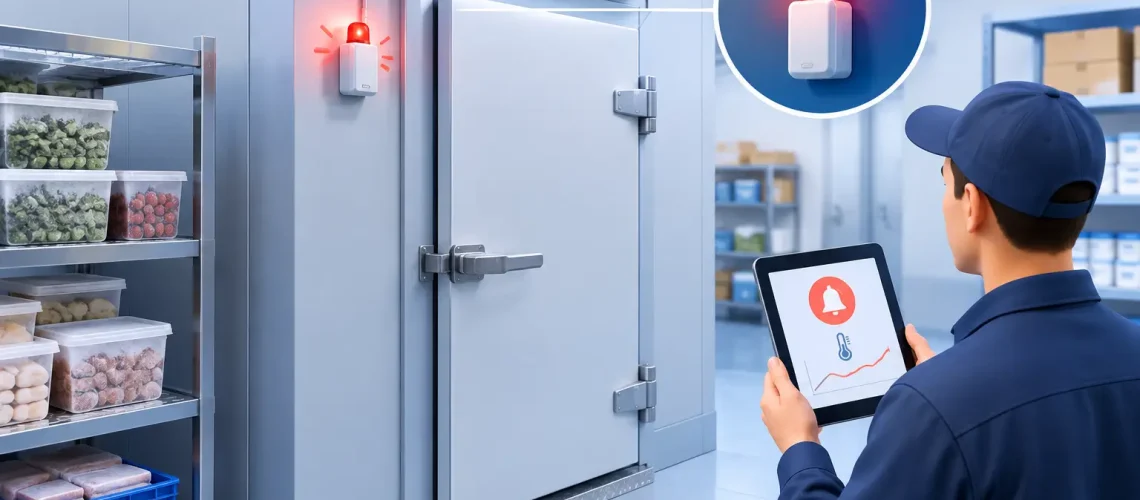

A freezer can remain powered, sound normal, and still be moving toward a costly temperature excursion. A commercial freezer alarm guide should therefore begin with one principle: an alarm is not simply a notification device. It is part of an operating strategy for protecting inventory, preventing equipment damage, and giving the right people enough time to act.
For a restaurant, grocery operation, cold storage facility, lab, or institutional kitchen, the cost of missed alarm coverage can extend far beyond spoiled product. A single event may create food safety exposure, interrupted operations, emergency repair premiums, insurance documentation issues, and unnecessary energy use. The right alarm approach turns freezer performance from an unknown into a managed condition.
What a Commercial Freezer Alarm Must Detect
The primary purpose of a freezer alarm is to identify a condition that puts required storage temperatures at risk. High-temperature alarms are the most familiar example, but temperature alone does not explain every failure mode. A freezer may warm because of a power outage, failed compressor, defrost problem, refrigerant issue, door left open, evaporator fan failure, control malfunction, or restricted airflow.
A well-designed alarm system measures the conditions that matter to the application and distinguishes a momentary event from a developing failure. For many facilities, that means continuous temperature monitoring with configurable high and low thresholds. It may also include power-loss detection, door status, compressor run time, condenser performance, or other equipment-specific inputs.
Low-temperature alarms deserve attention as well. Colder is not always safer. Temperatures that fall outside a product specification can damage sensitive pharmaceuticals, biological materials, prepared foods, or packaging. A freezer used for general food storage requires a different alarm strategy than one protecting high-value medical inventory.
The operating target and alarm limits should be based on product requirements, regulatory obligations, equipment design, and the time needed for personnel to respond. Setting a high alarm too close to the normal operating temperature creates nuisance alerts. Setting it too high can eliminate the intervention window that protects inventory.
Select Alarm Coverage Based on Operational Risk
Not every freezer needs the same system. A standalone reach-in freezer holding low-value product may need local audible alarming and basic remote notification. A walk-in freezer supporting a busy foodservice operation needs more dependable off-site escalation, battery backup, event history, and clear response ownership. A multi-site retailer or cold storage operation often benefits from centralized visibility across every location.
Start by evaluating the consequences of failure. Consider the value and sensitivity of stored inventory, the facility’s staffing schedule, the availability of backup storage, repair response times, and whether the freezer supports a mission-critical process. A freezer that is unattended overnight or on weekends should not depend on a local horn that nobody can hear.
There is also a difference between monitoring a room and monitoring the refrigeration system serving it. Room temperature monitoring tells operators that storage conditions are changing. Equipment monitoring can provide earlier warning that a component is operating abnormally, allowing maintenance teams to address the cause before temperatures move out of range. The stronger programs use both perspectives.
Sensor Placement Determines Whether Alerts Are Useful
An alarm system is only as reliable as the information reaching it. Poor sensor placement can generate readings that are technically accurate but operationally misleading.
Avoid placing sensors immediately in the path of evaporator discharge air, next to doors, against exterior walls, or in locations affected by frequent loading activity. These spots can experience rapid temperature swings that do not reflect the temperature of stored product. At the same time, do not place a sensor in a protected location that masks a real warming trend elsewhere in the freezer.
For walk-ins and larger rooms, one sensor may not be enough. Temperature variation can occur between the door area, center of the room, upper shelving, and areas with limited airflow. Facilities should assess thermal patterns under actual operating conditions, including deliveries, stocking, defrost cycles, and peak use. More than one sensing point may be justified where inventory value or room size makes blind spots unacceptable.
Product-simulating probes can help reduce false alarms caused by brief air-temperature changes. They also introduce a trade-off: because they respond more slowly, they may delay warning during a genuine equipment failure. The appropriate approach depends on the product, its thermal mass, and the available time to move inventory or restore cooling.
Configure Alarms for Action, Not Noise
A notification that does not prompt a defined action quickly becomes background noise. Alarm configuration should identify what constitutes an urgent event, who receives the alert, and what happens if that person does not acknowledge it.
Set alarm delays thoughtfully. A short rise during a door opening or defrost event may not warrant a text message at 2 a.m. However, excessive delay can turn a recoverable issue into a product-loss event. Use the freezer’s normal temperature behavior to establish a delay that filters routine fluctuations without concealing abnormal trends.
Escalation should reflect the facility’s response capability. For example, an initial alert may go to an on-site manager or designated maintenance contact. If it is not acknowledged within a defined interval, the system can notify a second contact, operations leadership, or an external service provider. For critical applications, alarm routing should account for nights, weekends, holidays, and staff turnover.
A useful alarm message identifies the asset, location, current condition, time of event, and required next step. “Freezer alarm” is not enough information for a multi-unit facility. “Walk-in freezer 2, receiving area, temperature 14°F and rising for 20 minutes” gives the recipient a basis for immediate action.
Build a Response Plan Before the Alarm Sounds
Even the best commercial freezer alarm cannot protect inventory if employees are unsure how to respond. Every monitored freezer should have a documented response procedure matched to its risk level.
That procedure should establish who confirms the alarm, how temperature is verified, who checks doors and power, when maintenance is called, and when product must be transferred. It should also define who has access to backup storage, emergency contacts, keys, and any required product disposition process.
For facilities with regulated products or formal food safety programs, event records matter. Alarm history, acknowledgment times, temperature trends, corrective actions, and repair documentation provide evidence that the organization responded responsibly. Automated monitoring can make this recordkeeping far more consistent than handwritten logs, especially across multiple sites.
Staff training should include realistic scenarios, not just a posted procedure. Teams need to know the difference between a brief alarm caused by a door being held open and a sustained warming trend that requires immediate product protection. A quarterly test is far less disruptive than discovering an unassigned alert path during an actual failure.
Test the System and Maintain the Equipment
Alarm testing is not a one-time commissioning step. Sensors can drift, batteries can fail, communications can be interrupted, contact lists can become outdated, and software settings can change. A system may appear functional until the moment it is needed most.
Test each component on a schedule appropriate to the application. Confirm sensor accuracy against a calibrated reference, simulate high-temperature and power-loss events when feasible, verify that alerts reach every assigned recipient, and document acknowledgment and escalation timing. Review alarm history for recurring events that point to a larger mechanical or operational problem.
Repeated door-open alarms may indicate poor workflow, damaged gaskets, inadequate closing hardware, or insufficient staffing during deliveries. Repeated high-temperature alarms after defrost may point to settings, airflow, fan performance, or refrigeration capacity. Treating every alert as an isolated nuisance can hide the conditions that eventually cause a major failure.
Preventive maintenance remains essential. Clean condensers, inspect door seals, verify defrost operation, address ice buildup, check fan performance, and evaluate refrigerant system health. Monitoring does not replace maintenance. It gives maintenance teams better information about where attention will produce the greatest reliability and energy benefit.
Use Alarm Data to Improve Freezer Performance
The best alarm programs do more than report emergencies. Temperature trends, run-time patterns, recurring defrost behavior, and alarm frequency can reveal opportunities to reduce strain on equipment and control operating costs.
For example, a freezer that maintains temperature but runs excessively may be carrying a condenser issue, infiltration load, control problem, or inefficient operating sequence. A pattern of after-hours door alarms may support changes in procedures or access control. Facilities with multiple locations can compare performance and identify sites that need engineering attention before failures occur.
Refrigeration Technologies, LLC applies this approach through engineered monitoring and controls that help facilities move from reactive repair to earlier intervention. The goal is not more alerts. It is better visibility, faster response, and a refrigeration system that protects product while operating more efficiently.
A freezer alarm should give your team time and clarity when conditions change. When thresholds, sensors, escalation paths, and maintenance practices are aligned, an alert becomes more than a warning. It becomes a practical opportunity to prevent loss before it reaches the inventory, the operating budget, or the customer.