
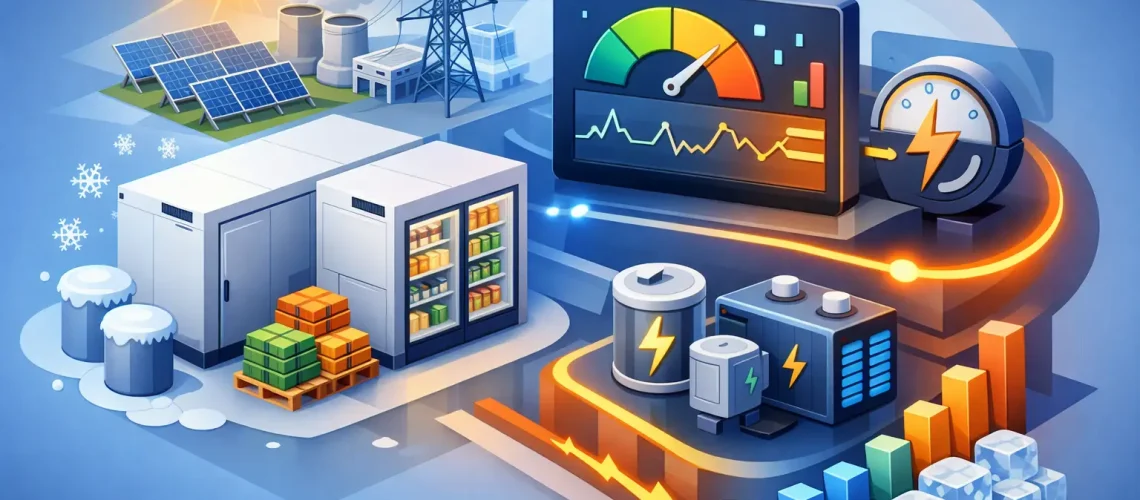

A refrigeration system can operate within temperature specifications all month and still create an avoidable utility cost problem in a single 15-minute interval. Demand charge controls address that exposure by managing when major refrigeration loads run, helping facilities reduce peak electrical demand without compromising product temperatures, food safety, or equipment reliability.
For grocery stores, cold storage operations, food service facilities, pharmaceutical sites, and other refrigeration-dependent environments, demand charges can represent a significant portion of the electric bill. The challenge is not simply to use less energy. It is to avoid using too much energy at the same time, especially when compressors, condensers, defrost heaters, HVAC equipment, lighting, and other large loads overlap.
Why Peak Demand Costs More Than Many Facilities Expect
Energy charges measure total kilowatt-hours consumed over a billing period. Demand charges measure the facility’s highest rate of electricity use, typically in kilowatts, during a defined interval. Depending on the utility tariff, that interval may be 15, 30, or 60 minutes.
A facility may have a reasonable monthly energy profile but still set a costly demand peak when several systems start or recover together. Consider a morning when refrigeration compressors ramp up after defrost, rooftop units respond to outdoor temperature, and production or kitchen equipment comes online. The resulting peak may last only minutes, yet it can affect the entire month’s bill.
This is why basic conservation measures alone do not always control utility costs. Efficient equipment reduces energy consumption, but a high-efficiency system can still create expensive peaks if its operation is not coordinated with other electrical loads.
How Demand Charge Controls Work in Refrigerated Facilities
Effective demand control begins with visibility. Facility teams need to understand the actual demand profile, identify the equipment contributing to peaks, and distinguish normal operating demand from avoidable load overlap. Utility interval data is useful, but it often lacks the system-level detail needed to determine why a peak occurred.
Refrigeration monitoring and controls provide that missing operational context. By collecting real-time information from compressors, suction groups, condensers, defrost circuits, case temperatures, pressure sensors, and other critical points, an engineered control strategy can respond to both electrical demand and refrigeration conditions.
Rather than shutting equipment down indiscriminately, a properly configured system can stage loads, delay noncritical events, adjust operating sequences, and use available thermal capacity. The objective is controlled load reduction, not blind load shedding. Product protection and system stability remain the operating priorities.
A demand strategy may coordinate several actions, including:
- Staggering compressor starts and preventing multiple large motors from starting at once.
- Rescheduling or sequencing electric defrost cycles to reduce simultaneous heater demand.
- Managing condenser fan operation and compressor staging based on actual refrigeration load.
- Temporarily shifting noncritical loads when the facility approaches a predetermined demand threshold.
The right actions depend on the facility. A frozen food warehouse, a supermarket with multiple rack systems, and a medical storage facility may all have different temperature tolerances, operating windows, equipment limitations, and risk profiles.
Refrigeration Load Is Flexible, but Not Unlimited
Thermal mass gives many refrigerated spaces a degree of operating flexibility. Under appropriate conditions, a control system may slightly adjust refrigeration sequencing or pre-condition a space before an anticipated peak period. That flexibility can help reduce demand without affecting stored product.
However, this is not a license to let temperatures drift. Facilities storing pharmaceuticals, biologics, high-value perishables, or regulated products may have narrow operating limits. Controls must be configured around verified temperature requirements, alarm thresholds, equipment capacity, and recovery performance. A strategy that is appropriate for a walk-in cooler may be unacceptable for a medical cold room.
That distinction separates engineered demand management from a generic energy-saving program. The refrigeration system must remain capable of maintaining required conditions during hot weather, heavy loading, door activity, and equipment faults.
Where Demand Charge Controls Deliver the Most Value
The best candidates are facilities with meaningful demand charges, substantial refrigeration loads, and operational patterns that create predictable or recurring peaks. Multi-site organizations often have an additional advantage: once a proven approach is established, it can be adapted across locations while still accounting for each site’s equipment and utility rate structure.
Demand controls are especially valuable when a facility experiences one or more of the following conditions: high condenser or compressor runtime during utility peak periods, simultaneous electric defrost schedules, frequent nuisance demand spikes, aging controls with limited visibility, or utility bills that show high demand charges relative to total energy use.
They can also support capital planning. If a site is considering a refrigeration retrofit, expansion, or equipment replacement, demand data helps determine whether a larger electrical service, additional capacity, or costly infrastructure upgrade is truly necessary. In some cases, better sequencing and controls can reduce the need for peak-driven capacity investments.
Start With a Load Profile, Not a Product Specification
Demand charge reduction programs fail when they begin with a device instead of a diagnosis. Installing a controller without understanding the facility’s electrical demand pattern, refrigeration architecture, defrost schedule, and temperature requirements can create limited savings or introduce operational risk.
A disciplined assessment should review utility billing data, interval demand where available, equipment inventory, refrigeration control points, alarm history, and site operating schedules. The assessment should also identify events that coincide with peaks, such as deliveries, production shifts, scheduled defrost, door openings, sanitation cycles, or afternoon ambient temperature increases.
From there, an improvement plan can define a practical demand threshold and the actions permitted as the site approaches it. The plan should make clear which loads are critical, which are adjustable, how long adjustments may last, and what conditions override demand reduction. For refrigeration-dependent businesses, temperature protection and equipment safeties should always take precedence.
This is also the point where facilities should evaluate measurement. Savings claims should be based on demand data and utility billing results, not assumptions. Weather, occupancy, product loading, and rate changes can affect results, so performance should be reviewed across enough time to separate meaningful improvement from normal variation.
Monitoring Turns Controls Into an Operating Tool
Demand controls are more effective when they are paired with continuous monitoring. The same data used to manage a peak can reveal a compressor short-cycling issue, a condenser problem, an abnormal defrost pattern, or a gradual decline in system performance.
That visibility matters because demand spikes are sometimes symptoms, not isolated billing events. A refrigeration system that runs harder than expected may be compensating for fouled coils, refrigerant issues, failed fan controls, poor door practices, or a control sequence that no longer matches the facility’s needs. Reducing demand without addressing the underlying cause may only mask a developing reliability problem.
With dashboard-based monitoring and mobile alerts, facility teams can see whether a demand-control event occurred, what loads were active, and whether temperatures and pressures remained within acceptable ranges. Refrigeration Technologies’ ArtikControl™ platform is designed to support this type of informed, continuous oversight, connecting energy performance with the refrigeration conditions that protect inventory.
Avoid the Common Trade-Offs
Demand reduction should never become deferred maintenance by another name. If a site repeatedly limits compressor operation to control peaks but has insufficient capacity, poor heat rejection, or an unresolved equipment fault, the result can be longer runtime, higher wear, and increased failure risk.
There is also a balance between aggressive peak shaving and realistic savings. A very low demand threshold may trigger controls too frequently and interfere with normal operation. A threshold set too high may never activate. The appropriate setting depends on the utility tariff, the value of the demand savings, the facility’s load profile, and the refrigeration system’s ability to respond safely.
The strongest programs are reviewed regularly. Utility rates change. Equipment ages. Store layouts, product volume, production schedules, and seasonal loads change as well. Demand settings that worked last year may need adjustment after a retrofit, expansion, or operating change.
Demand Charge Controls Should Protect More Than the Utility Budget
For refrigeration-dependent operations, the goal is not simply a lower number on the electric bill. It is a more controlled facility: one where energy peaks are understood, equipment operation is visible, and cost reduction does not come at the expense of product quality or uptime.
A practical next step is to compare utility demand intervals with refrigeration operating data from the same periods. When teams can see what caused the peak, they can decide whether to change a schedule, correct an equipment issue, or implement controls that reduce demand while keeping critical temperatures protected.