
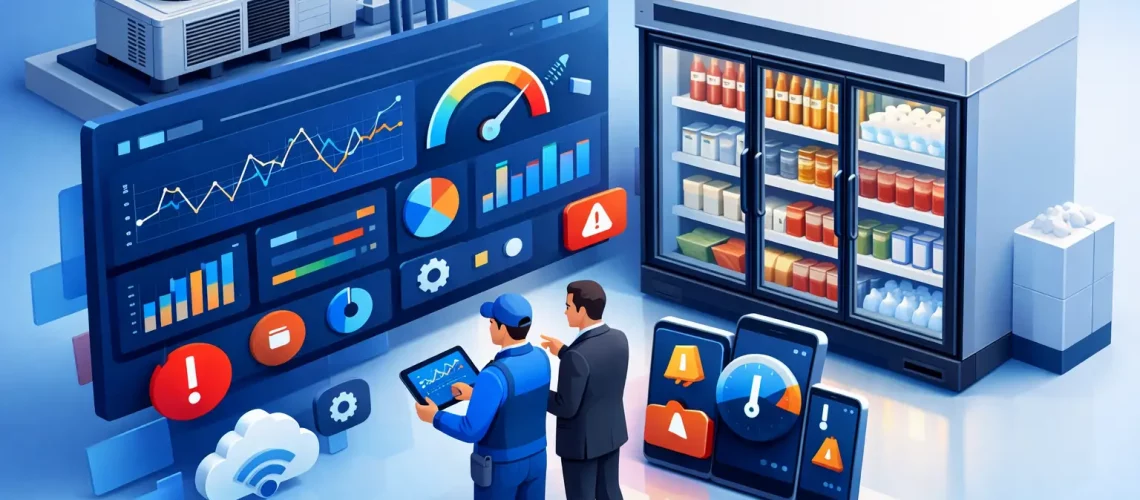

A walk-in cooler can hold temperature for hours while a compressor runs harder than it should, a condenser slowly fouls, or a defrost cycle begins affecting product conditions. By the time someone notices a problem during a manual check, the facility may be facing spoiled inventory, an emergency service call, and a difficult explanation to customers or regulators. Refrigeration dashboards give facility teams a continuous view of the conditions that lead to those failures – while there is still time to act.
For grocery, food service, cold storage, medical, biotech, and other refrigeration-dependent operations, visibility is not a convenience. It is part of protecting revenue, product quality, compliance, and equipment life. The right dashboard does more than display temperatures. It translates refrigeration data into operational priorities.
What Refrigeration Dashboards Should Actually Do
A useful dashboard brings together the readings, equipment status, alarms, and trends that operators need to manage a refrigeration system with confidence. That can include box temperatures, suction and discharge pressures, compressor runtime, defrost activity, condenser performance, door status, power conditions, and alarm history.
The value comes from context. A single temperature reading can tell an operator whether a case or cooler is currently within range. A trend over several days can reveal a rising temperature pattern, excessive cycling, a declining pull-down rate, or a recurring issue after defrost. Those patterns are where avoidable downtime and unnecessary energy use often begin.
A dashboard should answer practical questions quickly: Which locations need attention now? Which assets are operating outside their normal pattern? Is a temperature alarm caused by an open door, a refrigeration fault, a defrost cycle, or a sensor issue? Has a repair corrected the underlying problem or only reduced the symptom temporarily?
This requires more than collecting data. It requires organized, reliable data that is visible to the people responsible for action.
From Temperature Logs to Operating Intelligence
Many facilities still depend on handwritten temperature logs, periodic inspections, or alarms that send a generic notification without showing what happened before the alert. Those methods have a role, particularly as a backup process, but they are limited. They capture isolated moments rather than the operating story behind them.
A refrigeration dashboard creates a record of how the system behaves across shifts, weekends, weather changes, loading cycles, and maintenance events. A facility manager can compare current performance with historical operation. A maintenance director can see whether the same circuit generates repeated alarms. An energy manager can identify equipment that runs longer or cycles more often than comparable assets.
That distinction matters because refrigeration problems rarely arrive without warning. A compressor may show extended runtime before it fails. A condenser issue may raise head pressure before capacity drops enough to trigger a high-temperature alarm. A leaking door gasket may create frequent temperature recovery events long before staff describe the cooler as unreliable.
Early detection does not eliminate every failure. Mechanical components wear out, power interruptions happen, and operating conditions change. It does give teams more choices. Planned service is usually less disruptive and less expensive than an after-hours emergency response, especially when perishable or temperature-sensitive product is at risk.
The difference between data and a decision
More data is not automatically better. A dashboard overloaded with points, graphs, and alerts can make urgent issues harder to find. The best approach is tailored to the facility, its equipment, and the people who will use the information.
A multi-site grocery operator may need an enterprise view that highlights exceptions by store, department, and severity. A cold storage facility may need detailed trend analysis across compressors, evaporators, and defrost controls. A medical or biotech environment may place greater emphasis on documented temperature history, alarm acknowledgment, and escalation procedures.
The dashboard design should match the operational decision. Supervisors need clear exceptions and status. Technicians need diagnostic detail. Leadership needs evidence of avoided losses, reduced runtime, and capital priorities. One screen does not have to serve every role in the same way.
The Operating Signals That Matter Most
Each refrigeration system is different, so the exact points to monitor depend on the application and available controls. Still, several categories consistently provide meaningful insight.
Temperature is the most visible measure because it connects directly to product protection. Yet ambient temperature alone is not enough. Product temperature, supply and return air temperature, and the rate of temperature change can all help distinguish a short-term event from a developing failure.
Equipment performance data provides the next layer. Compressor status and runtime, suction and discharge conditions, evaporator fan operation, defrost status, and condenser conditions help technicians identify why a space is warming or why energy consumption is rising. Door switches and occupancy-related signals can add useful context in busy kitchens, retail back rooms, and loading areas.
Alarm management is equally important. An alert that arrives too late, goes to the wrong person, or repeats without a clear escalation path does not protect inventory. Effective monitoring uses defined thresholds, appropriate delays, and mobile notifications that support fast response without creating constant nuisance alarms.
Trend history turns all of those points into evidence. It helps teams verify repair results, recognize recurring problems, and make decisions based on operating behavior rather than anecdote.
How Dashboards Support Lower Energy Costs
Refrigeration is often one of the largest electrical loads in a food retail, food service, or cold storage operation. Energy waste is not always visible on a utility bill until it has accumulated over months. A dashboard can make it visible much earlier.
Excessive compressor runtime, poor temperature recovery, unnecessary defrost activity, high condensing pressure, and equipment that operates outside normal schedules can all increase consumption. By identifying these patterns, teams can prioritize adjustments, maintenance, controls upgrades, or equipment improvements where they will have the greatest effect.
The trade-off is that dashboards do not create savings by themselves. A dashboard identifies the opportunity; a qualified team must interpret the conditions and execute the right corrective action. In some cases, a simple door repair, coil cleaning, setpoint correction, or schedule adjustment may resolve the issue. In others, the data may support a larger retrofit involving controls, fans, compressors, or refrigeration system design.
That is why monitoring performs best as part of an engineered improvement strategy, not as a stand-alone reporting tool. Refrigeration Technologies, LLC combines field assessment and system improvements with ArtikControl™ monitoring and control capabilities so operating data can lead to practical, measurable action.
Building a Dashboard Program That People Use
Successful dashboard programs begin with the facility’s risks and objectives, not a generic list of sensors. Start by identifying the inventory, spaces, and equipment where a failure would have the highest operational or financial impact. Then define what normal operation looks like and who owns each type of response.
This process should include alarm escalation. If a freezer temperature rises at 2:00 a.m., the dashboard should not merely record the event. It should notify the appropriate people, establish who acknowledges it, and support a documented response. For multi-site operations, centralized visibility can help leaders confirm that alerts are being handled consistently.
Sensor placement and calibration deserve attention as well. A poorly located sensor may reflect air discharge rather than product conditions, or it may create false alarms near a door. Reliable readings depend on sound installation, maintenance, and an understanding of the refrigeration application.
Finally, review the data on a regular operating cadence. Daily alarm review helps address immediate concerns. Weekly or monthly trend review helps identify repeat failures, maintenance needs, and energy opportunities. Without that rhythm, even the best dashboard can become another screen that no one checks until an emergency occurs.
Questions to ask before selecting a solution
Facility leaders should look beyond the appearance of the dashboard. Ask whether the platform can monitor the equipment and points that matter in your operation, whether it provides usable trend history, and whether alerts can be routed based on severity and responsibility.
Also ask what happens after an alert. Some providers supply monitoring only. Others can assess the system, diagnose root causes, recommend upgrades, and support ongoing optimization. The right model depends on internal maintenance resources, geographic footprint, and the consequences of a refrigeration failure.
For facilities with limited technical staff, a consultative partner can shorten the distance between an alarm and a corrective plan. For organizations with experienced in-house teams, detailed dashboards can improve prioritization and provide stronger documentation across sites.
Make Visibility Part of Reliability
The strongest refrigeration programs do not wait for a warm box, a failed compressor, or an inventory claim to reveal a weakness. They use operating data to see developing conditions, direct maintenance effort, and validate that improvements are producing results.
A dashboard is most valuable when it helps someone make a better decision before product, uptime, or energy performance is compromised. Start with the assets that carry the greatest risk, establish clear response ownership, and use each trend as an opportunity to prevent the next emergency.