
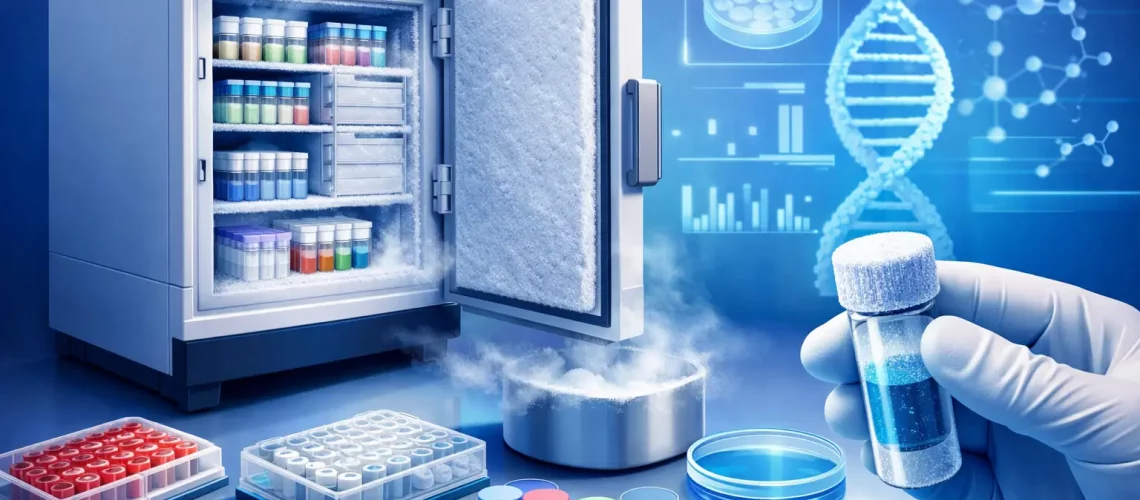

A biotech freezer can appear to be operating normally right up to the point when sample integrity is at risk. That is why biotech freezer results should be measured by more than a displayed temperature or a successful alarm test. For facilities responsible for cell lines, reagents, clinical materials, reference standards, or other irreplaceable inventory, the real result is dependable preservation with documented performance, controlled energy use, and no surprise failures.
A freezer is not a standalone box. Its performance reflects compressor health, heat rejection, door use, room conditions, sensor accuracy, defrost behavior, electrical quality, maintenance practices, and how quickly the team responds when conditions change. Facilities that treat these factors as connected operating conditions are in a stronger position to protect inventory and avoid disruptive emergency service.
What Strong Biotech Freezer Results Look Like
The most meaningful outcome is stable storage conditions at the point where product is stored, not simply a controller reading that looks acceptable. A reliable freezer maintains the required temperature range through normal load changes, door openings, ambient swings, and routine operating cycles. It also recovers predictably after those events.
Consistency matters because temperature excursions are not always dramatic. A cabinet may experience repeated short-duration deviations that do not trigger an immediate crisis but still create an unresolved quality concern. Trends can reveal these conditions long before a single alarm event tells the full story.
Strong performance also includes operational visibility. Facility and laboratory teams should be able to answer practical questions: Is the freezer cycling more often than usual? Is its pull-down time increasing? Is the condenser operating under excessive stress? Did a door remain open longer than expected? Are multiple units showing the same issue after a utility event? Without reliable data, these questions turn into manual investigations after the risk has already increased.
Energy performance belongs in the same conversation. A freezer that maintains temperature while drawing unnecessary power may have airflow restrictions, condenser fouling, poor controls, worn door gaskets, or a developing mechanical issue. Energy use alone does not diagnose the problem, but a meaningful change in consumption can be an early indicator worth investigating.
Why a Passing Temperature Check Is Not Enough
A periodic temperature check confirms a moment in time. It does not establish how the freezer performed overnight, during a hot weekend, after a defrost cycle, or while a compressor was under strain. In biotech environments, the gap between periodic verification and continuous operational awareness can be significant.
The displayed temperature may also differ from the temperature that matters most. Sensor placement, calibration drift, probe response time, and airflow patterns can affect what is measured. A properly designed monitoring strategy considers the storage requirement, the type of freezer, the inventory location, and the facility’s quality procedures.
There is also a difference between an alarm and a response system. An alarm that reaches an unattended workstation, an outdated contact list, or a person without clear authority to act may not prevent a loss. Effective protection requires escalation paths, defined response responsibilities, and a process for documenting what happened and what corrective action was taken.
The Operating Conditions Behind Poor Results
When biotech freezer performance declines, the cause is often visible in the operating pattern before it becomes obvious in the cabinet temperature. Common warning signs include:
- Longer run times or near-continuous compressor operation
- Frequent high-temperature alarms or slow temperature recovery
- Elevated condenser temperatures, restricted airflow, or dirty coils
- Repeated door-open events, damaged gaskets, or frost accumulation
- Changes in energy use that cannot be explained by normal demand
Each signal requires context. Frequent cycling might result from a control setting, an oversized or undersized system, changing room conditions, or a component beginning to fail. The right response is not to replace parts blindly. It is to evaluate the refrigeration system, controls, load profile, and operating environment together.
Build Better Biotech Freezer Results With Continuous Visibility
Continuous monitoring changes freezer management from reactive repair to informed prevention. Rather than waiting for a failure, operations teams can review trends, establish normal performance baselines, and investigate deviations while there is still time to act.
Temperature is the starting point, but it should not be the only point. Depending on the equipment and application, useful data may include compressor runtime, suction and discharge conditions, condenser performance, defrost activity, door status, ambient conditions, electrical status, and energy consumption. The objective is not to collect data for its own sake. It is to identify conditions that threaten reliability, product protection, or operating cost.
A monitored system should also help teams prioritize. A brief, self-correcting variation may require observation. A sustained temperature rise paired with extended compressor runtime and high condenser temperature deserves immediate attention. This distinction helps maintenance personnel focus on the conditions most likely to become failures.
For multi-unit or multi-site operations, centralized dashboards and mobile alerts can reduce the time spent checking disconnected equipment records. Refrigeration Technologies, LLC applies this approach through engineered monitoring and intelligent controls, including the ArtikControl™ platform, so facility teams have actionable visibility instead of a collection of isolated alarms.
Pair Monitoring With the Right Physical Improvements
Monitoring identifies risk, but it does not clean a condenser, restore airflow, replace a failing component, or correct a control sequence. Lasting performance improvements typically combine visibility with targeted physical and operational changes.
Start with the basics that most directly affect heat removal and cabinet stability. Confirm that condensers are clean and have adequate clearance, evaporator airflow is not restricted, doors close correctly, gaskets are intact, and drain paths are functioning. These items sound routine, yet they can materially affect compressor loading, recovery time, and temperature stability.
Then examine how the unit is being used. A freezer located near a heat source, repeatedly opened during peak activity, or packed in a way that blocks airflow will perform differently than the same model in a controlled environment. Capacity planning matters as well. Adding inventory or changing the material load can alter thermal demand and expose limitations that were not apparent at installation.
Controls should be reviewed with equal care. Poorly coordinated defrost schedules, inaccurate setpoints, unstable control logic, or inadequate alarm thresholds can create unnecessary energy use and operational risk. Adjustments should be made within the freezer manufacturer’s requirements and the facility’s validation and quality framework. In regulated settings, every change may require review, documentation, and requalification.
Know When Repair Is Not the Best Result
A repair may restore operation, but it is not always the most economical or reliable choice. If a unit has repeated failures, declining recovery performance, costly energy use, or obsolete controls, a retrofit or replacement evaluation may produce a better long-term outcome. The decision depends on equipment condition, inventory criticality, service history, utility costs, available redundancy, and the consequences of downtime.
For some laboratories, redundancy is the most important investment. For others, improved controls and predictive monitoring deliver the greatest immediate value. A facility with several aging units may need a phased improvement plan rather than a single capital project. The right solution is the one that reduces risk without creating avoidable disruption to research or operations.
Make Response Part of Freezer Performance
Even well-maintained equipment can face power interruptions, component failures, utility problems, and human error. The performance plan must include what happens after an alert.
Response procedures should identify who receives notifications, who can access the space, where inventory can be transferred, and when technical support is engaged. Contact information must be reviewed regularly, especially when staff roles change. If backup capacity exists, it should be known, accessible, and tested under realistic conditions rather than assumed to be available during an event.
After any significant excursion or equipment issue, review the trend data and the response timeline. Did the alert arrive promptly? Did the team have enough information to act? Was the root cause corrected, or was the unit simply reset? This review turns each incident into a chance to improve reliability rather than repeat the same failure pattern.
The most valuable biotech freezer result is confidence earned through evidence: stable conditions, clear trends, disciplined maintenance, and a response plan that works when the freezer cannot wait for business hours.