
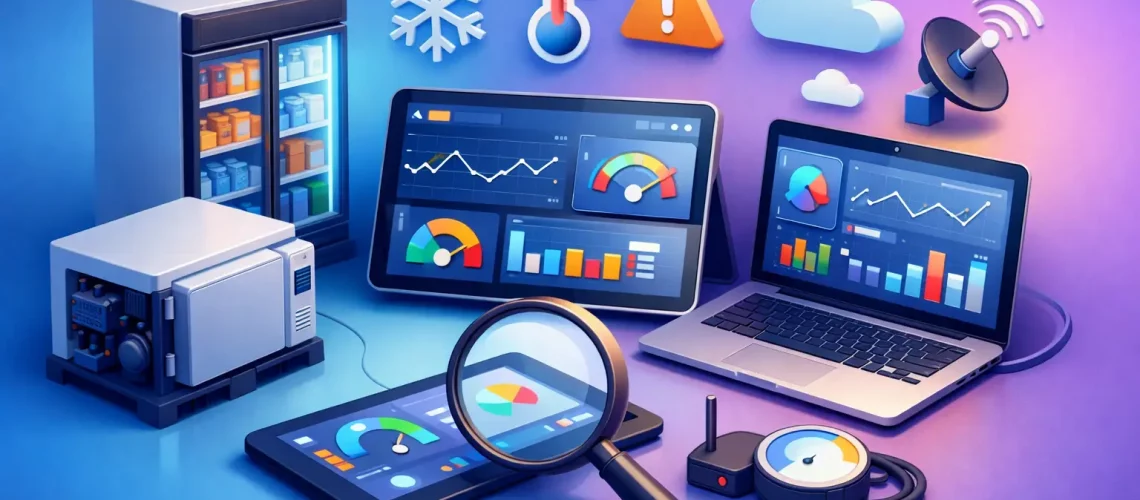

A walk-in cooler that drifts a few degrees overnight does not always announce itself with a failed compressor. It may begin with longer run times, an abnormal defrost pattern, a door left open, or a sensor reading that never reaches the right person. A useful refrigeration monitoring software review starts there: not with a list of dashboard features, but with the facility risks the system must help prevent.
For grocery, food service, cold storage, medical, biotech, and institutional facilities, monitoring software should create earlier visibility into developing problems, protect inventory, and support better maintenance decisions. The right platform can also reveal energy waste that routine service calls and monthly utility bills do not make obvious. The wrong one can create a stream of alarms that staff learn to ignore.
What Refrigeration Monitoring Software Should Do
At a basic level, refrigeration monitoring software collects operating data from sensors, controllers, and connected equipment. It displays temperatures, pressures, run status, alarms, and other system conditions in a dashboard. That baseline matters, but it is not the standard a high-dependence facility should use to evaluate a platform.
The stronger systems connect data to action. They identify temperature excursions quickly, route alerts to the appropriate people, preserve historical records, and help technicians determine whether an issue is isolated or part of a larger system pattern. In more advanced applications, monitoring works alongside intelligent controls to adjust operation, reduce unnecessary energy use, and prevent damaging operating conditions.
That distinction is critical. A standalone temperature logger can document that a problem occurred. A well-designed monitoring and control solution can help a facility respond before product is compromised or equipment damage becomes expensive.
Refrigeration Monitoring Software Review: The Criteria That Matter
A platform should be evaluated against the realities of the site, including equipment age, refrigeration architecture, staffing coverage, product sensitivity, and the cost of downtime. The following areas usually determine whether a monitoring investment delivers operational value.
Alert Quality Is More Valuable Than Alert Volume
Every facility manager wants notification when a refrigerated space moves outside its acceptable range. But an alert is only useful if it is timely, credible, and directed to someone who can act.
Review how the software handles escalation. Can it notify an on-site employee first, then a maintenance manager, service provider, or operations leader if the issue remains unresolved? Can alarm thresholds and delays be set differently for a floral cooler, a vaccine refrigerator, a freezer, and a refrigerated display case? Can users distinguish a brief door-opening event from a sustained loss of cooling capacity?
Alarm fatigue is a real operational risk. Systems that issue repeated notifications without context can condition teams to dismiss warnings. Look for configurable alert logic, acknowledgement tracking, escalation paths, and enough operating detail to support a fast response.
Data Must Support Diagnosis, Not Just Compliance
Historical temperature records are essential for food safety, quality assurance, and incident documentation. Yet a platform should provide more than a graph showing that temperatures rose at 2:00 a.m.
Useful reporting helps answer why the event happened. It may show compressor short cycling, repeated high-temperature alarms after defrost, a suction pressure trend that indicates a developing issue, or performance changes after a control setting was modified. The ability to compare equipment behavior over days, weeks, and seasons gives maintenance teams a stronger basis for planning repairs and verifying results.
For multi-site operators, reporting should also make it practical to compare locations. One store or facility may have a recurring energy or reliability issue that is hidden when each site is viewed separately. Centralized visibility helps leadership prioritize where engineering attention will have the greatest impact.
Integration Determines How Much of the System You Can See
Monitoring software is only as informative as the equipment and data sources it can reliably connect to. Before selecting a platform, document the refrigeration assets that matter most: walk-ins, reach-ins, rack systems, condensers, compressors, evaporators, critical storage units, and any existing controls.
Some facilities need simple wireless temperature monitoring. Others need integrated monitoring of refrigeration pressures, compressor operation, defrost cycles, electrical load, and control states. Neither approach is automatically better. The appropriate level of integration depends on the consequence of failure and the opportunity to improve system performance.
Ask whether the platform can be adapted to mixed equipment environments. Many commercial facilities have a combination of older systems, newer controllers, and equipment from multiple manufacturers. A solution that requires a complete equipment replacement may not be the most economical path. On the other hand, limited sensor-only monitoring may not provide enough insight for a facility dealing with chronic failures or high utility costs.
Remote Access Must Be Matched With Accountability
Mobile alerts and remote dashboards are now expected, but access alone does not solve a problem. The operational question is whether the system creates a clear response process.
A strong setup identifies who receives which alerts, what actions are expected, and when outside service should be involved. It also records alarm acknowledgement and resolution activity. This is especially valuable for organizations with limited overnight staffing, multiple sites, or critical inventory that cannot wait until normal business hours.
Remote visibility can reduce unnecessary site visits, but it should not become a substitute for qualified field evaluation. Refrigeration problems often require interpretation of operating conditions, equipment condition, controls, and site-specific load changes. The best technology supports experienced decision-making rather than pretending every alarm has a one-click fix.
Look Beyond Subscription Price
Software pricing is easy to compare. The cost of an undetected refrigeration failure is not. A meaningful evaluation should consider total value: protected product, avoided emergency repairs, reduced downtime, lower energy consumption, labor efficiency, and better equipment life.
A low-cost monitoring package may appear attractive if it provides basic temperature alerts. But if it cannot identify recurring performance issues, provide actionable diagnostics, or support a reliable escalation process, it may leave major risks unaddressed. Conversely, a highly integrated system can be excessive for a small operation with limited equipment and low product-loss exposure.
The right question is not, “What is the monthly software fee?” It is, “What operational problem will this system solve, and what is that problem costing us now?” Establish baseline information before implementation whenever possible. Track refrigeration-related service calls, temperature incidents, product loss, run-time patterns, and utility consumption. Those measures make it easier to demonstrate return on investment after the system is in place.
Implementation Is Part of the Product
A dashboard does not deliver savings or protection by itself. Sensor placement, controller configuration, alarm thresholds, network reliability, equipment labeling, and staff training all affect results.
For that reason, evaluate the provider’s implementation process as carefully as the software interface. A site assessment should identify critical assets, failure points, communication limitations, and operational priorities. The implementation plan should define which conditions will be monitored, who will receive alarms, and how the facility will respond.
This consultative approach matters most in complex or energy-intensive facilities. Refrigeration Technologies, LLC uses its ArtikControl™ platform as part of a broader engineered approach that can include assessment, retrofit planning, intelligent controls, and ongoing monitoring. That model recognizes a practical truth: better data creates the most value when it is paired with a plan to improve the equipment and operating practices behind the data.
Questions to Ask Before You Select a Platform
Before committing to a monitoring solution, facility leaders should request clear answers about the following:
- Which equipment conditions can the platform monitor, and which conditions require additional controls or sensors?
- How are alarms configured, acknowledged, escalated, and documented?
- What historical reporting is available for compliance, maintenance planning, and performance analysis?
- Can the system support multiple sites, user roles, and different alert rules by equipment type?
- What happens if network connectivity or a sensor fails?
- Who installs, configures, supports, and reviews the system after deployment?
- How will the provider help measure avoided loss, energy improvement, or reduced service activity?
The answers should be specific to the facility, not generic product claims. A provider that understands refrigeration operations should be able to discuss sensor locations, alarm logic, control opportunities, and likely failure modes in practical terms.
Choose a System That Helps Your Team Act Earlier
The best refrigeration monitoring software does not simply tell a facility that temperatures are out of range. It gives the right people enough notice and context to protect product, stabilize equipment, and avoid a costly emergency. For organizations that depend on refrigeration every hour of the day, that earlier action is where monitoring becomes a performance strategy rather than another screen to manage.