
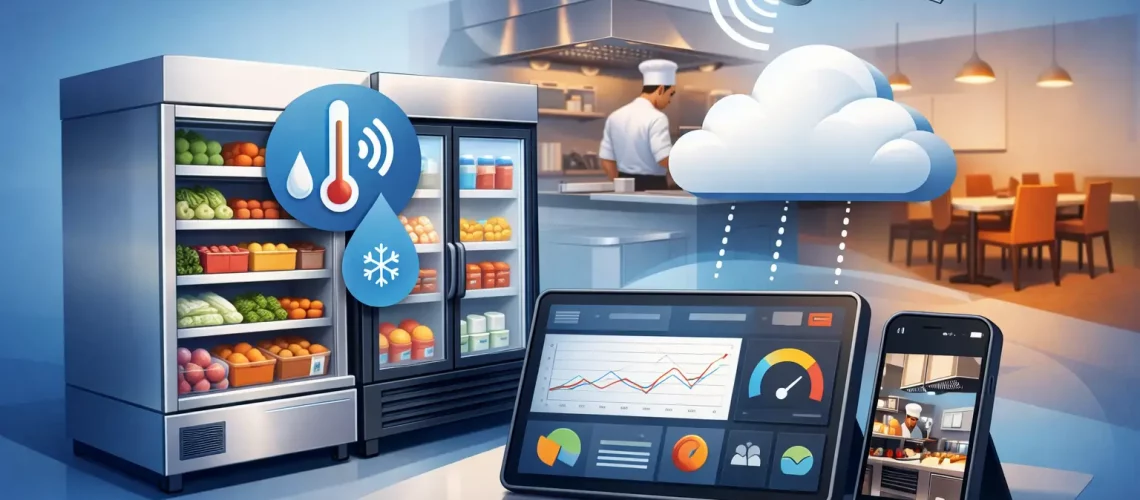

A walk-in cooler rarely fails at a convenient time. More often, the problem starts overnight, during a weekend rush, or between shifts when no one is standing in front of the case to notice a rising temperature. That is exactly why remote refrigeration monitoring for restaurants has moved from a nice-to-have upgrade to an operational safeguard.
For restaurant operators, refrigeration is not just another building system. It protects food safety, inventory value, labor efficiency, and service continuity. A single missed alarm or slow response can mean spoiled product, emergency service calls, and an unhappy health inspector. The larger the operation, or the more locations involved, the harder it becomes to rely on manual checks and reactive maintenance alone.
Why restaurants need remote refrigeration monitoring
Most restaurants still have some version of a manual process. Staff log temperatures, managers glance at digital readouts, and maintenance gets called when something is obviously wrong. That approach can satisfy basic compliance, but it does very little to catch developing issues early.
Refrigeration systems usually give warnings before they fail completely. Suction pressure starts drifting. Defrost cycles do not perform as expected. A door gets left open too often. Condenser performance drops as ambient conditions change. A walk-in may still feel cold enough to the kitchen team while the equipment is already running harder, longer, and less efficiently.
Remote refrigeration monitoring changes that by creating continuous visibility instead of occasional snapshots. Sensors, controllers, and cloud-based dashboards track critical conditions in real time and send alerts when readings move out of range or when system behavior suggests trouble is building. For a restaurant, that means problems can be identified while there is still time to protect inventory and schedule a controlled response.
What remote refrigeration monitoring for restaurants should actually track
Not all monitoring setups deliver the same value. Some only report box temperature. That is better than nothing, but it is not enough if the goal is failure prevention and cost control.
A more useful system watches both product-protection conditions and equipment-performance indicators. Temperature remains central, of course, but the strongest programs also monitor door activity, alarm history, compressor runtime, defrost performance, pressure trends, and other operating data that reveal how the system is behaving over time.
This is where many buyers need to think beyond simple alerting. If your system only tells you that a cooler is already warm, you are still operating close to the point of loss. A better solution helps identify why temperatures are drifting and whether the issue is tied to airflow restrictions, control problems, mechanical wear, usage patterns, or environmental conditions.
For single-unit independent restaurants, a focused setup may be enough. For regional groups, franchise operators, campuses, and multi-site food service operations, the value grows quickly when all refrigeration assets are visible through one dashboard with mobile alerts and site-level reporting.
The business case goes beyond spoiled food
The obvious benefit is product protection. If a freezer fails overnight, remote monitoring can shorten the time between event and response. That alone can pay for the system in the right environment.
But inventory loss is only one part of the return. Restaurants also face hidden costs when refrigeration performance slips. Equipment that short cycles, runs excessively, or struggles through inefficient defrost patterns consumes more energy. It often fails earlier. Service calls become more urgent and more expensive. Staff time gets pulled into crisis management instead of service and production.
There is also the compliance and brand-risk side. If temperature records are inconsistent or alarms are missed, restaurants may have a harder time documenting safe holding conditions. For operators with catering, commissary functions, institutional food service, or high-value ingredients, that risk is magnified.
In practical terms, remote monitoring supports four measurable outcomes: fewer catastrophic failures, lower emergency repair exposure, better control over utility spend, and more confidence that food is being held within acceptable ranges. For operations leaders, that combination matters more than any single hardware feature.
Remote refrigeration monitoring for restaurants works best with engineered controls
Monitoring alone is valuable, but monitoring paired with intelligent controls is where performance improves faster. Restaurants often inherit refrigeration systems that were installed in phases, patched over time, or adjusted by different contractors with different priorities. As a result, many sites operate with poor setpoints, inconsistent controls, unnecessary runtime, or equipment mismatches that quietly increase cost and risk.
An engineered monitoring and control approach does more than report alarms. It helps define what normal should look like for that specific site. It can highlight recurring inefficiencies, support retrofit opportunities, and create a path toward better system stability.
That is especially relevant in restaurants with multiple walk-ins, prep boxes, undercounter refrigeration, bar cooling, and specialty storage. The operating profile of each asset is different. A one-size-fits-all alarm strategy may generate too many nuisance alerts in one area and not enough actionable warning in another.
A consultative provider should account for that. The right program starts with field evaluation, identifies where monitoring points should be placed, determines which assets are most critical, and builds alert thresholds around how the restaurant actually operates. That level of customization is often what separates useful monitoring from a flood of ignored notifications.
What decision-makers should look for in a monitoring partner
Restaurant operators do not need more data for the sake of data. They need a system that translates refrigeration activity into action.
That starts with visibility. Can the platform show asset-level performance clearly across one site or many? Can managers, maintenance teams, and leadership all access the information they need without digging through confusing screens? If mobile alerts are included, are they specific enough to support response decisions, or do they simply say something is wrong?
Next comes accountability. Some vendors sell sensors and stop there. Others combine hardware, controls, engineering support, and ongoing monitoring into a performance program. For many restaurants, especially those without deep in-house refrigeration expertise, the second model is far more effective.
It also helps to ask whether the provider can connect monitoring to broader system improvements. If recurring alarms point to control upgrades, refrigeration retrofits, or energy optimization opportunities, can the same partner help execute the fix? That continuity matters because the goal is not to observe problems indefinitely. The goal is to reduce them.
This is where a company like Refrigeration Technologies, LLC can fit well for operators who want more than standalone devices. A customized assessment, engineered recommendations, and ongoing dashboard-based monitoring create a stronger operating model than relying on emergency service after the damage is already done.
Common trade-offs restaurants should consider
There is no single perfect setup for every operation. A small independent concept with one walk-in cooler and one freezer may prioritize basic temperature alerting and after-hours visibility. A multi-location operator may need centralized dashboards, reporting, and escalation paths tied to internal maintenance workflows.
Cost is another consideration, but it should be viewed in context. The cheapest monitoring option may have limited sensor coverage, poor alert logic, or little support after installation. On the other hand, a highly advanced platform may be more than a site needs if the refrigeration footprint is small and relatively simple. The right choice depends on asset criticality, hours of operation, maintenance capability, and the financial impact of downtime.
There is also the question of alarm fatigue. If thresholds are not configured properly, staff may start ignoring alerts. That is not a reason to avoid monitoring. It is a reason to implement it carefully, using site-specific logic and review processes that keep alarms meaningful.
Where the biggest gains usually show up
In restaurant environments, the first wins often come from catching avoidable events early. A failing evaporator fan motor, a stuck defrost issue, a door left ajar, or a case that starts creeping out of range can all be addressed before they turn into major losses.
Over time, the larger gains often come from trend analysis. Operators begin to see which assets are unstable, which locations generate repeated service issues, and where controls or retrofit work would produce measurable savings. Monitoring stops being a passive alert system and becomes part of facility management strategy.
That shift is especially valuable for organizations trying to standardize performance across locations. When refrigeration data is centralized, leaders can compare sites more accurately, prioritize capital spending more intelligently, and reduce the guesswork around maintenance decisions.
For restaurants, refrigeration problems rarely stay isolated to the mechanical room. They affect labor, inventory, guest experience, and margins. Remote monitoring gives operators a way to manage that reality with more precision and less reaction.
The best time to identify refrigeration trouble is before your staff finds warm product at opening. A monitoring strategy built around visibility, early warning, and engineered follow-through gives restaurants a stronger position every day the equipment is running – which is every day that matters.