
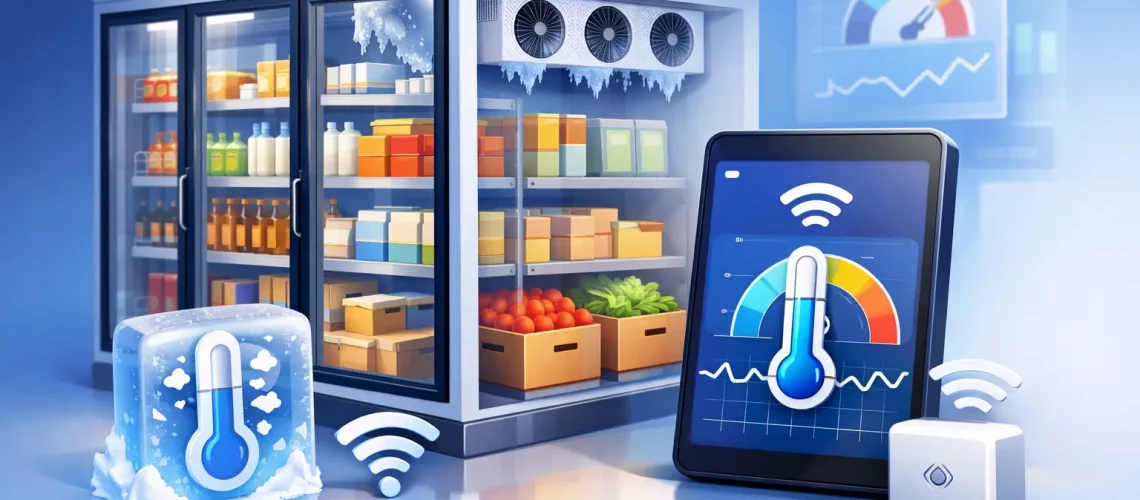

A walk-in cooler can look fine at 7:00 a.m. and still cost you thousands by noon. One drifting sensor, one sticking expansion valve, or one door left ajar during a busy shift can push product into the danger zone long before anyone notices. That is why commercial cooler temperature monitoring has moved from a nice-to-have feature to a core operating requirement for facilities that depend on refrigeration performance.
For grocery, food service, cold storage, medical, and institutional environments, the issue is not simply whether a cooler is cold right now. The real question is whether the system is stable, visible, and predictable over time. Spot checks and manual logs may satisfy a basic process on paper, but they rarely provide the level of protection needed to prevent inventory loss, downtime, rising energy use, and surprise service calls.
Why commercial cooler temperature monitoring matters
Temperature is the most visible indicator of cooler performance, but it is also one of the last symptoms to appear when equipment health is declining. By the time a manager sees an out-of-range reading during a walkthrough, the refrigeration system may have been struggling for hours. In some cases, the cooler is recovering just enough to mask the problem until the next peak load period.
Commercial cooler temperature monitoring changes that dynamic. Instead of relying on occasional checks, operators get continuous visibility into what the cooler is doing throughout the day and night. That matters because refrigeration failures do not wait for business hours. They often begin after closing, during weekends, or in low-staff periods when no one is standing nearby to hear an alarm or notice a temperature swing.
For facilities with multiple boxes, multiple shifts, or multiple locations, the value is even greater. A single cooler problem can disrupt product availability, create compliance concerns, trigger emergency labor, and shorten equipment life. Monitoring gives operations teams a way to catch performance issues early, respond faster, and make better maintenance decisions based on actual trends rather than guesswork.
What good monitoring should actually tell you
Not all monitoring systems deliver the same level of value. A basic temperature logger can record data, but recording alone does not prevent failure. Effective commercial cooler temperature monitoring should help you answer four practical questions: Is the temperature in range, is it staying stable, is the system working harder than it should, and is this issue urgent enough to act on now?
That requires more than a single sensor and a data archive. The strongest systems combine continuous sensing with alarm thresholds, trend visibility, and a way to notify the right people quickly. If a cooler drifts above setpoint for a short period during a door-heavy delivery window, that may not warrant the same response as a sustained rise overnight with no recovery cycle. Context matters.
Monitoring also becomes more valuable when it is paired with deeper system insight. If temperature starts trending poorly, operators often need to know whether the cause is airflow restriction, control failure, defrost timing, dirty coils, refrigerant issues, or operational behavior at the site. A platform that only says the cooler is warm is useful. A platform that helps explain why it is getting warm is far more useful.
The difference between alerts and actionable alerts
Too many facilities install alarm systems that create noise instead of clarity. If staff receive repeated nuisance notifications, they stop trusting the system. Eventually, real problems get ignored along with the false alarms.
Actionable alerting is more disciplined. It accounts for delay timers, escalation paths, operating schedules, and the normal behavior of the equipment. It gets critical issues to the people who can act on them and avoids overwhelming teams with every short-lived fluctuation. That balance is one of the biggest differences between consumer-grade monitoring and engineered commercial solutions.
Where manual temperature checks fall short
Manual checks still have a place in many operations, especially for compliance documentation or shift-level verification. But they are snapshots, not monitoring. A reading taken at 9:00 a.m. tells you almost nothing about what happened at 2:00 a.m., during the delivery rush, or after a breaker tripped and reset.
This gap is where many losses happen. Product can be exposed to unsafe or damaging temperatures for hours, then partially recover before anyone performs the next check. On paper, everything looks acceptable. In reality, the cooler experienced a significant performance event.
Manual processes also depend heavily on consistency. Different employees may check different locations, read displays differently, or log values late. In high-turnover or fast-paced environments, that variability introduces risk. Automated monitoring does not eliminate the need for accountability, but it does remove much of the inconsistency that comes with human-only processes.
Commercial cooler temperature monitoring and energy performance
Reliability is usually the first reason facilities invest in monitoring, but energy is a close second. A cooler that struggles to hold temperature often consumes more power before it fails outright. Compressors may short cycle, evaporator fans may run inefficiently, or setpoints may be pushed lower than necessary to compensate for unresolved performance issues.
When temperature data is trended over time, patterns begin to emerge. A cooler that runs hot every afternoon may be fighting a door management problem, poor airflow, or undersized capacity during peak loads. A box with unstable recovery after defrost may have control tuning issues. A unit that slowly loses temperature performance over several weeks may be signaling maintenance needs that can be addressed before energy waste turns into a service emergency.
This is where monitoring earns its keep beyond food safety or product protection. It supports smarter operational decisions. Instead of reacting to complaints, facilities can prioritize corrective actions based on measurable performance degradation and likely cost impact.
What to look for in a monitoring approach
For most commercial sites, the right solution depends on the consequences of failure, the number of refrigerated spaces, and how much visibility the team needs. A restaurant with one walk-in has different requirements than a multi-site grocery operator or a medical facility storing temperature-sensitive inventory. Even so, a few capabilities tend to matter across the board.
First, sensor placement and calibration matter. If the sensor is in the wrong location, the data may not reflect actual product conditions. Second, remote access matters. A system that can only be checked on-site limits response speed. Third, alarm management matters. Notifications should be timely, targeted, and easy to escalate. Fourth, historical trending matters. Without trend data, it is hard to separate one-off events from developing system problems.
In many facilities, the best results come from combining monitoring with controls and engineering support. That is especially true when recurring alarms point to a design issue, outdated control strategy, or equipment mismatch. Monitoring tells you what is happening. An experienced refrigeration partner helps determine what to change so the problem stops repeating.
Why customization matters
A common mistake is assuming every cooler should be monitored the same way. In practice, alarm thresholds, sensor strategy, and response protocols should reflect the product, the operating schedule, and the business risk.
A floral cooler, a beer cave, a school kitchen walk-in, and a biotech storage space may all be called coolers, but their acceptable temperature bands, traffic patterns, and failure consequences are very different. A generic setup can create blind spots or excessive alarms. A customized approach aligns the monitoring strategy with the actual use of the space.
From reactive repair to predictive action
The biggest operational shift happens when monitoring is used as a predictive tool instead of a digital thermometer. Continuous temperature visibility can reveal early warning signs that maintenance teams would otherwise miss. Slightly longer pull-down times, recurring overnight drift, or gradual instability after defrost are often signs that something is changing in the system.
Catching those signs early can prevent a product-loss event and reduce the cost of repair. Emergency service is expensive, especially when it involves after-hours dispatch, spoiled inventory, and disruption to staff. Planned correction is almost always less costly than crisis response.
That is why many organizations now view monitoring as part of asset protection, not just compliance. It protects inventory, but it also protects labor, operating continuity, and equipment life. For facilities under pressure to reduce utility spend and avoid unplanned downtime, that broader value matters.
Refrigeration Technologies, LLC approaches this issue the way high-dependence facilities need it approached – as a performance system, not a standalone gadget. Monitoring works best when it is tied to field expertise, control strategy, and a clear plan for how alerts turn into action.
If your cooler temperatures are only visible when someone happens to check them, you are still operating with a blind spot. The better path is continuous visibility, smarter alerts, and a monitoring strategy built around the cost of failure at your facility. When you can see temperature problems early, you have a much better chance of fixing the cause before it becomes a loss.